

3D Jewelry Design Program (2026 Guide)
What a 3D Jewelry Design Program Should Really Do
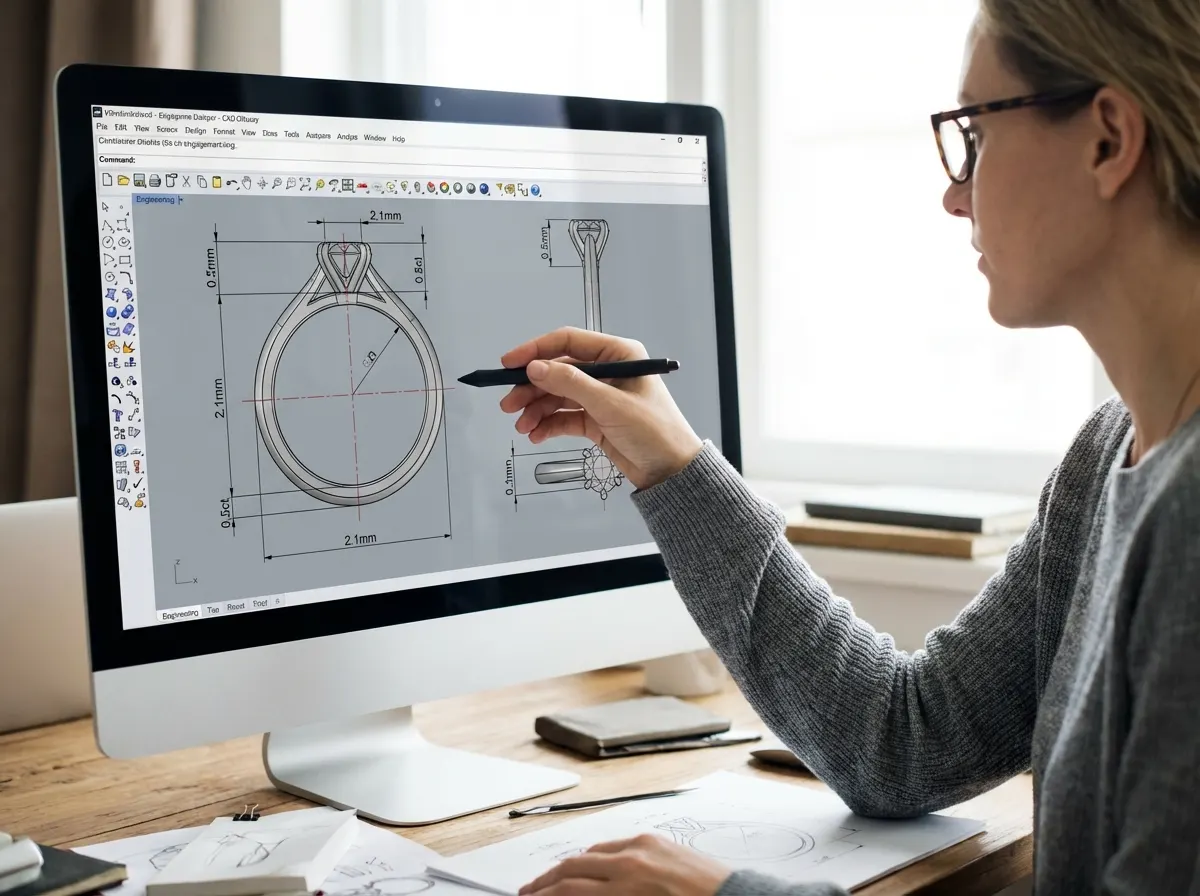
Many brands start software selection by looking at render quality, but that is rarely the most important issue. A good jewelry design program should help you move from concept to manufacturable model with fewer edits, clearer dimensions, and more confidence in stone fit, wall thickness, wearability, and production feasibility.
For jewelry brands, retailers, and private label sellers, the best 3d jewelry design solution is usually the one that matches your actual workflow. If your team creates highly technical ring settings, you may need a specialized 3d cad jewelry design environment with gemstone libraries, pavé tools, and parametric controls. If your business focuses more on concept development and outsourced production, a simpler system with strong visualization and export support may be enough.
It also helps to distinguish between design software and production support. A program can be excellent for modeling but still leave your team struggling with prototypes, wax output, or communication with a factory. That is why many brands compare software alongside design partners, prototyping support, and sampling workflows. If you are still mapping the software landscape, our articles on best 3d modeling software for jewelry design and 3d modeling software for jewelry can help you narrow the field.
Key Capabilities to Compare Before You Commit
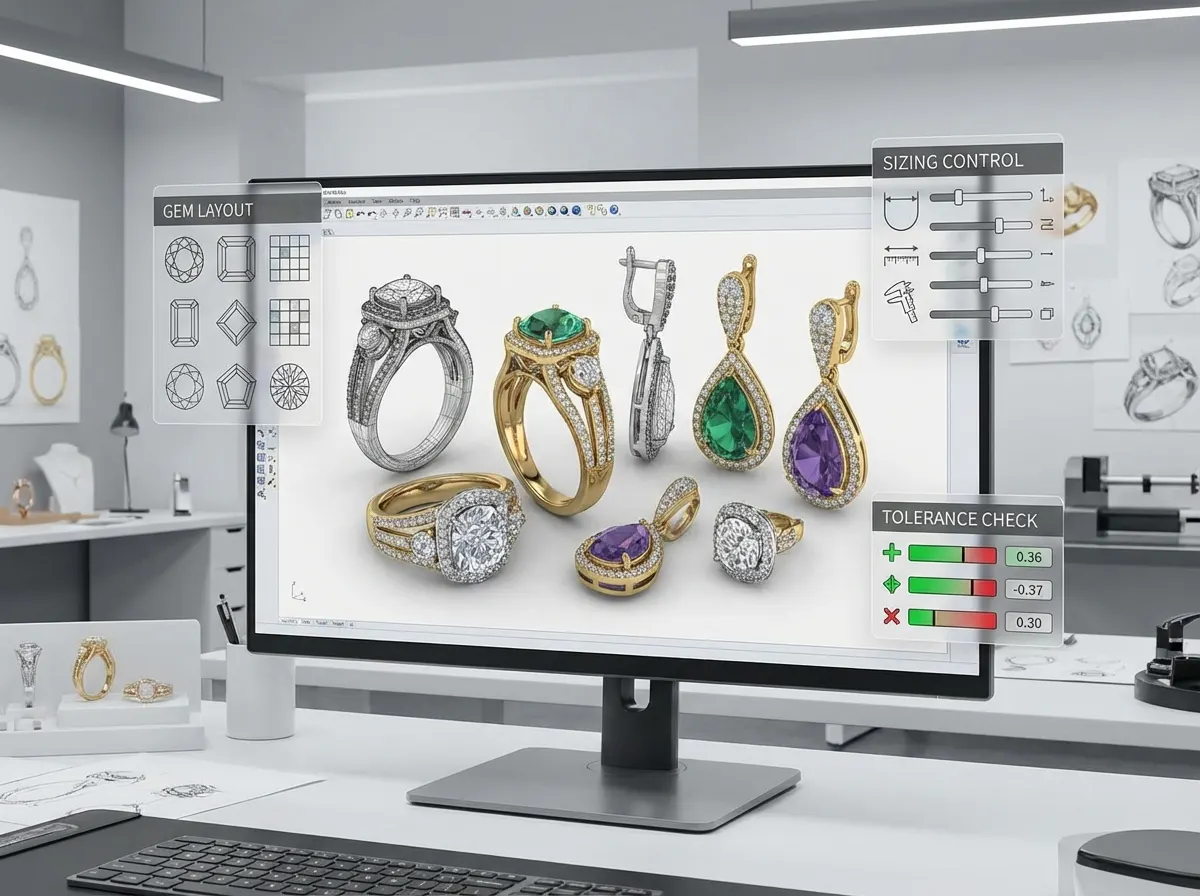
When evaluating 3d jewelry design software, look beyond marketing claims and test how each system performs in a real commercial workflow.
1. Manufacturing-ready modeling tools
The best programs make it easier to create pieces that can actually be cast and assembled. That includes precise sizing, prong and seat accuracy, tolerance control, surface continuity, and support for production-friendly geometry. If your design team hands off files to a manufacturer, this matters more than visual effects.
2. Gem and setting functionality
Some jewelry design programs include useful gemstone libraries, stone layout tools, and setting modules for rings, earrings, and pendants. These features can speed up development and reduce errors, especially if your collection uses consistent stone sizes across multiple SKUs.
3. File export and compatibility
Check whether the software exports the formats your manufacturer prefers, such as STL or 3DM. Good compatibility reduces rework and helps avoid detail loss between your designer, renderer, and production partner.
4. Learning curve and team adoption
A powerful cad program for jewelry design is not always the best choice if only one person on your team can use it efficiently. A slightly simpler solution can deliver better business results when it supports faster onboarding, easier revision cycles, and stronger collaboration.
5. Visualization and client approval support
If you sell custom jewelry design services or pre-sell collections before manufacturing, rendering and presentation tools matter. Better previews can shorten decision cycles and help buyers approve styles before sampling. This is especially useful when aligning designs with seasonal direction, as seen in jewelry trends watch 2025 key design elements year and broader shifts in technology jewelry design innovations shaping industry.
Pros and Cons
Strengths
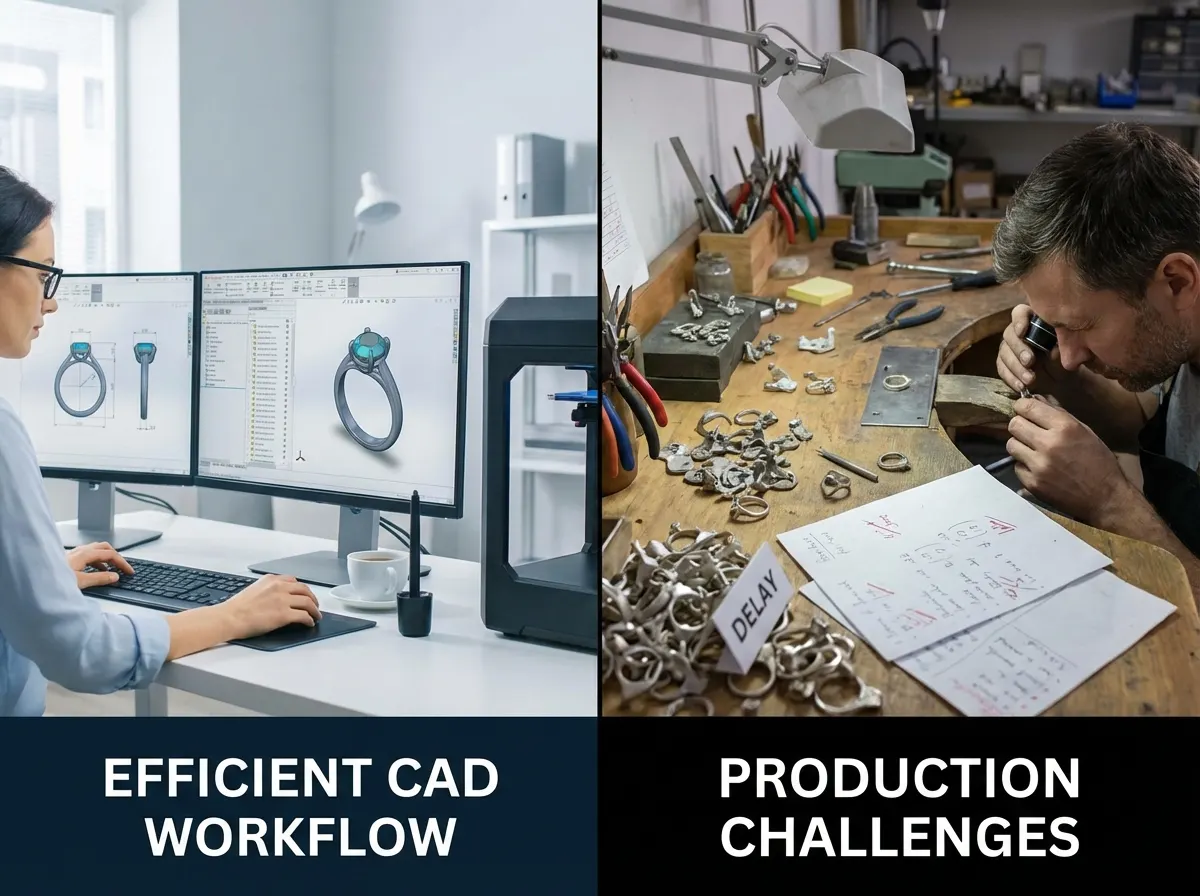
- A strong 3d jewelry design program helps reduce sampling mistakes before metal, stones, and labor are committed.
- It improves communication between designers, merchandisers, and manufacturers through clearer files and dimensions.
- It can speed up product development, especially for repeatable settings, collection variants, and size adjustments.
- It supports better pre-production visualization for wholesale line reviews, buyer presentations, and custom approvals.
- It makes it easier to build a more organized, scalable development process as your brand grows.
Considerations
- Many advanced jewelry design programs require significant training before your team becomes efficient.
- Software alone does not guarantee production success if the designer does not understand casting, tolerances, and wearability.
- Licensing, hardware, rendering tools, and plugin costs can add up quickly beyond the base subscription price.
- Some systems are excellent for concept design but less practical for clean manufacturing handoff.
Who This Kind of Solution Is Best For
A dedicated 3d jewelry design app or desktop platform is a good fit if your brand develops custom collections regularly, sells made-to-order pieces, or needs faster iteration before sample approval. It is especially valuable for growing brands that want tighter control over ring architecture, stone placement, or collection variation.
That said, not every business needs to own the full software workflow in-house. If your team is small, your styles are technically complex, or your volume does not justify specialized design staff, it may be more practical to work with a manufacturer that already provides CAD development, prototyping, and production review as part of the process.
Where Royi Sal Fits in if You Need More Than Software
Software is only one part of the product development chain. If your brand needs support turning sketches or concepts into production-ready silver jewelry, Royi Sal can be one option to consider alongside in-house design tools. Through its Services and guided Customer Journey, Royi Sal supports brands that need help with design development, sampling, and manufacturing coordination. This can be useful when your team has ideas but does not want to build a full CAD department internally.
Royi Sal is best suited to B2B brands looking for an OEM or ODM partner rather than a retail service. It is also fair to note the limitations. MOQ requirements apply, production timelines are not instant, and the company is Thailand-based, which may affect shipping and planning for some markets. If you want to discuss whether your collection is a fit, you can Contact Us or review finished style direction through Royi Sal’s Jewelry Collections and Jewelry Catalog.
How to Evaluate a 3D Jewelry Design Program for Real Business Use
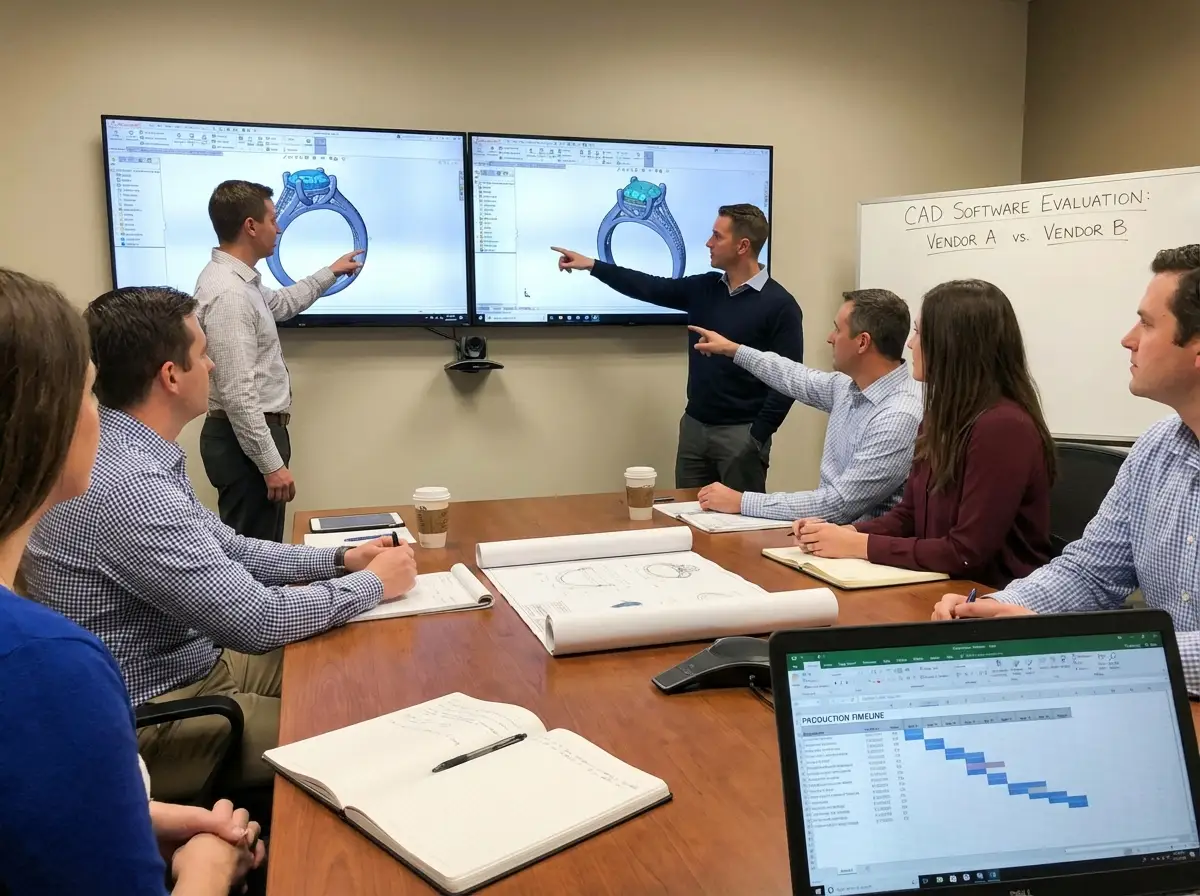
If you are comparing jewelry design programs for commercial use, test them against business outcomes, not just design features. Here are the five criteria that matter most.
Manufacturing quality and consistency
Ask whether the software helps your team produce files that are consistent from one style to the next. Good tools should support exact sizing, repeatable stone layouts, clean surfaces, and reliable export. A file that looks fine on screen but creates casting issues is expensive.
Design capability and customization
Look at how well the program supports your product mix. Rings with center stones and pavé need different tools than lightweight fashion earrings or chain-based charms. Make sure the software matches your brand’s style complexity, not just general jewelry design needs.
Workflow speed and lead times
Consider the full timeline from first concept to approved sample. A slower but highly technical system may still be the right choice for fine details. But if your team launches collections frequently, faster revision cycles and easier approvals may matter more. Royi Sal’s article on How Use CAD Technology Faster Jewelry Prototyping is useful here because it connects software decisions to development speed.
Value for money
Do not just compare license prices. Factor in training time, hardware upgrades, rendering add-ons, and the cost of correction if your files are not production ready. A cheaper program that creates repeated sampling problems can become more expensive than a premium option.
Support beyond the file
This is the part many buyers overlook. If your team needs model cleanup, wax preparation, production review, or sampling feedback, software vendors may not provide that. In those cases, manufacturer-side support becomes part of your real solution. A practical example is the workflow described in Royi Sals 3D Sampling Workflow, where design data connects directly to physical sample development.
How Different Program Types Fit Different Jewelry Workflows
Not all jewelry design programs solve the same problem. One of the most useful ways to compare options is by the kind of modeling environment they use and the type of product development work your team actually does.
Parametric and history-based programs
These systems are strong when your brand needs repeatable edits, accurate dimensions, and clear version control. If you regularly adjust ring size, shank width, stone diameter, or gallery height across multiple SKUs, parametric tools can save real time. What many people overlook is that this matters most when you are building collections, not just single designs. The ability to update one measured feature without rebuilding the whole model supports faster collection expansion and cleaner sampling cycles.
Surface and freeform modeling tools
These are often better suited to sculptural silhouettes, softer transitions, and more artistic shapes. For brands working on statement pieces, organic motifs, or fashion styles with less dependence on repeated stone templates, this kind of flexibility can be useful. The tradeoff is that design freedom does not always equal production efficiency. You still need to confirm whether the final geometry can be cast, polished, assembled, and worn comfortably.
General 3D modeling programs
General-purpose 3D tools can work well for concept development, especially when a team already uses them for product visualization or broader design work. They are often most practical for brands that need custom jewelry design visuals, early concept validation, or unconventional forms that do not fit standard jewelry templates. The reality is that they may require more manual setup for ring sizing, seat accuracy, prong logic, and other jewelry-specific tasks.
Browser-based and lightweight tools
These can be useful for quick reviews, early-stage experimentation, or teams that want to test ideas without a heavy software rollout. From a practical standpoint, they are rarely the best long-term answer for technical production development. If your goal is commercial manufacturing, treat them as a support tool for ideation rather than your only 3d jewelry design program.
File Output, Editing, and 3D Printing Readiness
File support is often discussed too briefly when brands compare jewelry design programs. In real production, the question is not just whether a program can export a file. The question is whether that file remains usable at the next step.
An STL file is often suitable for prototyping or resin printing because it captures the model as a mesh. That can be enough when the design is final and no more structural edits are expected. A 3DM or other editable CAD format is more useful earlier in development because it preserves more flexibility for changes. If your manufacturer receives only a final mesh and finds a seat depth issue, weak prong, or thickness problem, revisions may take longer because the file is harder to edit cleanly.
Consider this: a program that produces attractive exports but weak editability can slow down your approval process. Your team may approve a render quickly, then lose days in cleanup because the manufacturing partner needs a rebuild instead of a simple adjustment. This is why brands should ask not only what formats a program exports, but also which formats remain editable, which ones maintain surface quality, and which ones your production partner prefers for review.
It also helps to think about 3D printing readiness in practical terms. Fine pavé, thin halos, under-gallery details, and delicate connectors may look acceptable on screen while still being risky for printing or casting. Good software supports these details, but safe production still depends on how the designer builds them. The program matters, but the file strategy matters too.
What to Check Before Sending a CAD File to Manufacturing
Even with the right software, a file should be reviewed before it moves into sample development. This step is often where brands reduce avoidable revisions.
Dimensions and tolerances
Confirm the overall size, stone dimensions, wall thickness, and key contact points. A design can be visually correct but still fail because a seat is too shallow, a band is too thin after polishing, or a connection point is too weak for wear.
Stone layout and setting logic
Check whether stone spacing, seat depth, and prong placement make sense in production, not just on screen. This is especially important for pavé, halo, and multi-stone styles where small misalignments create visible issues after casting and setting.
Assembly and finishing access
Now, when it comes to real manufacturing, polishing access and assembly order are easy to miss. Hidden surfaces, tight corners, and blocked setting areas can create extra labor or force design changes later. If your piece includes links, moving parts, or soldered components, the model should account for that from the start.
Print and cast practicality
Make sure the file does not rely on details that are too fragile for the intended prototype and production route. The reality is that a beautiful digital model still needs to survive printing, molding if used, casting, finishing, and stone setting. A quick pre-manufacturing review can prevent expensive back-and-forth after approval.
Frequently Asked Questions
What is the best 3d jewelry design program for a small brand?
The best option depends on your team size and technical needs. Small brands often do better with a program that balances usability, rendering, and clean export rather than the most advanced system on the market. If you outsource manufacturing, choose software that your production partner can easily work with and review.
Do I need specialized jewelry software or general 3D modeling software?
Specialized jewelry software usually saves time if your designs involve stone settings, ring sizing, pavé, or repeatable production details. General 3D tools can work for concept development, but they often require more manual setup for jewelry-specific tasks. The more technical your product line, the more value specialized tools provide.
Can a 3d jewelry design app replace a professional CAD designer?
Not usually. A good app can help with concepting, simple edits, and visualization, but professional CAD work still matters for technical accuracy and manufacturing readiness. If your pieces include precise settings, moving parts, or tight tolerances, skilled design input is still important even when the software is excellent.
Which file formats matter most for jewelry manufacturing?
STL is commonly used for printing and prototyping, while 3DM is often preferred for editable design work in jewelry CAD workflows. The right answer depends on your manufacturer and the stage of development. Before choosing a program, confirm what file types your production partner can accept without extra cleanup.
How much does a jewelry design program usually cost?
Costs vary widely. Entry-level options may start in the low hundreds of $USD per year, while specialized professional systems can run into several thousand $USD when you include licenses, rendering, plugins, and hardware. Training cost should also be included in your budget, especially for small teams.
Is rendering quality more important than CAD precision?
For commercial jewelry development, CAD precision is usually more important. Rendering helps with approvals, sales materials, and presentations, but poor geometry creates expensive downstream problems. The strongest workflow combines good visualization with technically sound modeling so you can both sell the concept and manufacture it efficiently.
Should I keep 3D design in-house or outsource it?
If you launch frequently, maintain a large SKU count, or need constant revisions, in-house capability may make sense. If your team is lean or your designs are complex, outsourcing can be more cost-effective. Many brands use a hybrid model where internal teams handle direction and a manufacturing partner handles technical development.
How can I tell if a design is production ready?
Look for complete dimensions, correct stone sizing, practical wall thickness, secure setting geometry, and export files your manufacturer can review without rebuilding. Production-ready design also requires awareness of polishing access, solder points, and wearability. If those details are unclear, a sample review is still needed.
Are 3d jewelry software programs useful for wholesale collection planning?
Yes. They help brands visualize assortments, create style families, test scale, and present new lines before investing in full production. This is especially helpful when planning seasonal launches or tailoring a collection for specific markets. Better previews often lead to faster buyer feedback and cleaner sampling decisions.
Are browser-based jewelry design programs good enough for manufacturing?
They can be useful for concept work, simple models, and early collaboration, but they are not always the best choice for technical production files. If your brand manufactures commercially, confirm that the program can support accurate dimensions, suitable export formats, and edits that do not require rebuilding the design later.
What is parametric modeling in jewelry CAD?
Parametric modeling means the design is built around measured values and relationships, so changes can be made more systematically. For jewelry brands, this is useful when you need to resize rings, adjust stone dimensions, or create multiple variations of a style without starting from zero each time.
Do computer requirements matter when choosing a 3d jewelry design program?
Yes. Some programs need stronger graphics performance, more memory, or specific operating system support to run smoothly. If your hardware is limited, a program that looks affordable on paper may still create workflow issues. Check system requirements before committing, especially if more than one team member will use the software.
Key Takeaways
- The right 3d jewelry design program should support manufacturing readiness, not just attractive renders.
- File compatibility, gemstone tools, and team usability matter as much as advanced modeling features.
- Software costs should be evaluated alongside training, revision speed, and sample risk.
- Many brands benefit from combining in-house design tools with manufacturer-side CAD and sampling support.
- Royi Sal can be a useful option if your brand needs design-to-production support, not just software alone.
Conclusion
A 3d jewelry design program is only the right solution if it helps your brand create designs that are easier to approve, easier to manufacture, and easier to scale. The best choice is not always the most advanced platform. It is the one that fits your team, your collection complexity, and your production process. If you need software alone, focus on workflow fit and file output. If you need broader support with CAD development, sample coordination, and manufacturing handoff, it makes sense to compare software with experienced partners too. If you would like practical guidance on how your designs can move from concept to production, explore Royi Sal’s services or get in touch to discuss your next collection.




Responses (0)