
Design Tips Enhancing Jewelry Brand Oem Partner

Why Design Quality Shapes OEM Results
An OEM relationship may look production-led from the outside, but the commercial outcome often depends on design clarity. A manufacturer can only execute consistently if your concept, dimensions, visual intent, and approval checkpoints are communicated in a way that holds up under production conditions.
That matters for several reasons. First, design decisions affect whether sampling is efficient or repetitive. Second, they influence how reliably a style can be reproduced across a larger run. Third, they shape how easily your collection can expand into line extensions, variants, or future reorders.
For B2B buyers, the right OEM partner is not simply a producer. It is a collaborator that can support custom jewelry design, development conversations, and practical decision-making before production begins. Royi Sal Jewelry operates in that B2B model, focusing on custom jewelry design and manufacturing for wholesale and private label clients, with a collaborative consultation approach and global fulfillment support. You can also explore broader Jewelry Manufacturing resources if you are still comparing how custom development fits your business model.
Strong OEM design work is usually less about chasing novelty and more about reducing interpretation risk while preserving your brand identity. That is where disciplined design practices can improve communication, quality consistency, and launch readiness.
OEM vs ODM: Choosing the Right Model for Your Brand
OEM is often discussed as if it is the default for private label, but many brands end up choosing between two different working models: OEM and ODM. The difference matters because it changes who owns the creative direction, how much control you have during development, and how differentiated your final assortment can realistically be.
In practical terms, OEM usually means you bring the concept, design direction, or development files, then your partner manufactures to that approved standard. Your brand is responsible for defining what “right” looks like, and the partner’s job is to help translate that into a repeatable production outcome. In an ODM-style approach, the manufacturer may start from their own existing designs or core platforms, then offer brand-level customization. That can be useful for speed, but it often comes with limits around what can change and how unique the end result will be.
When defining control in day-to-day production, it is helpful to be specific. Control is not only about a logo placement or a single approval moment. It is about who sets the design intent, who can authorize revisions, and who owns the technical decisions when a design needs to be adjusted for manufacturing reality. If those roles are not clear early, a project can drift into repeated sampling without a clear decision-maker.
OEM is typically the stronger fit when your brand is building proprietary hero styles, needs a consistent design language across a full collection, or expects long-term reorders where consistency matters as much as the first launch. ODM-style development may be considered when you are building an assortment quickly, testing categories, or working with limited internal design bandwidth, as long as you are comfortable with the tradeoff that “off-the-shelf with customization” may reduce differentiation.
Before you commit to either model, design ownership expectations should be explicit. You should clarify whether your designs, iterations, and final development files are treated as your brand’s assets, and what happens if you want to move production or expand the line later. You also want clarity on revision authority, including who decides when a change is a minor adjustment versus a resample or technical redesign. Many OEM problems are not manufacturing failures — they are model mismatches that were never defined in the brief.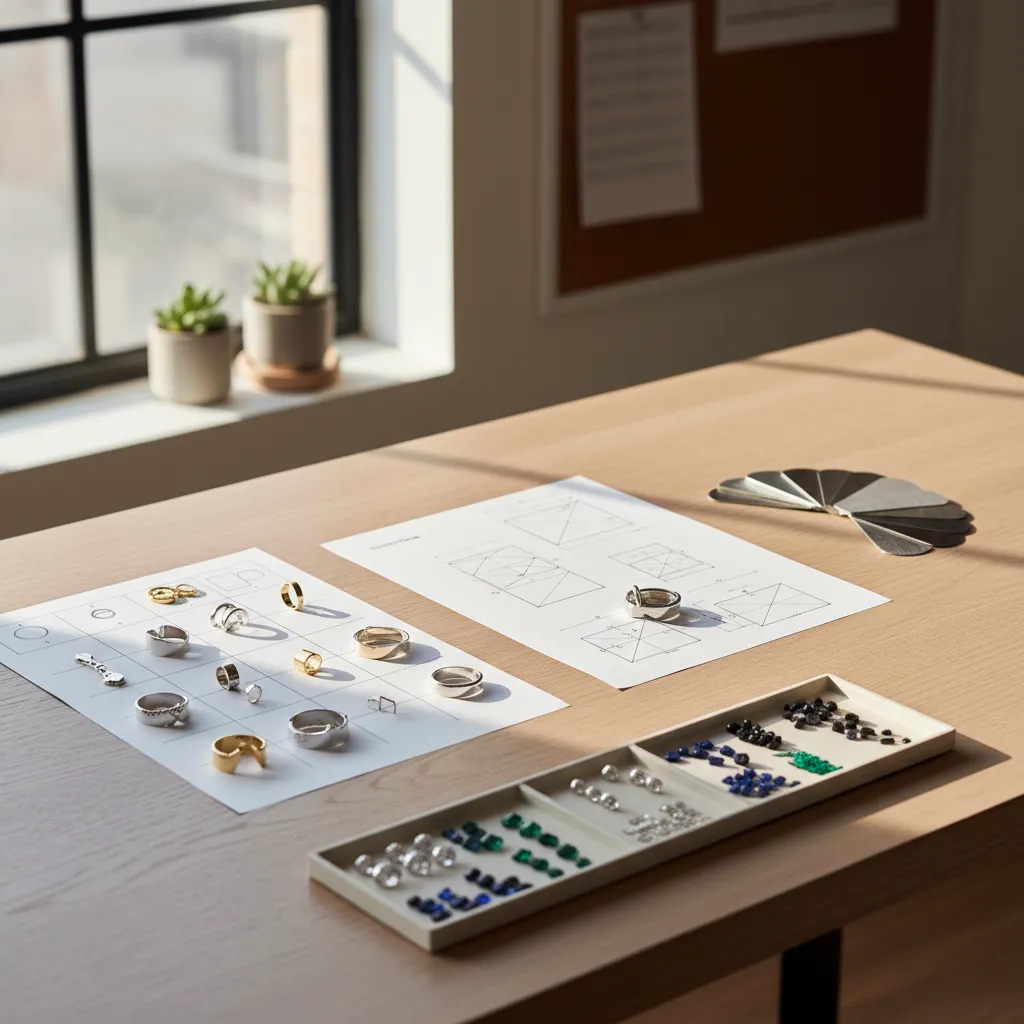
7 Design Tips That Strengthen an OEM Partnership
1. Build your collection around a clear brand language
A manufacturer can support execution more effectively when your brand direction is defined beyond general taste references. Your brief should show recurring shape preferences, target customer positioning, styling intent, and how each piece relates to the broader line.
If your assortment is inconsistent, the OEM partner may still produce individual styles, but the final collection could feel disconnected. Brands with a coherent visual system often find it easier to approve samples, merchandise grouped styles, and scale into future releases. This is especially relevant if you are studying how established labels approach luxury jewelry brands custom design services as a benchmark for consistency.
2. Write a design brief that removes guesswork
Many project delays start with incomplete briefs. A useful brief should identify what must stay fixed and what can be adjusted during development. Include intended use, approximate proportions, reference images, finish expectations, branding elements, and any non-negotiable visual priorities.
For OEM work, a brief is not only a creative document. It is a risk-control document. It helps align design, development, and production teams before sampling starts. The clearer the brief, the easier it may be to spot unrealistic expectations early rather than after a sample is already made.
3. Treat 3D development as a decision stage, not a formality
Digital development can help brands evaluate proportion, structure, and visual balance before physical sampling. That does not eliminate all production issues, but it may reduce avoidable revisions if stakeholders review carefully and approve the right details in sequence.
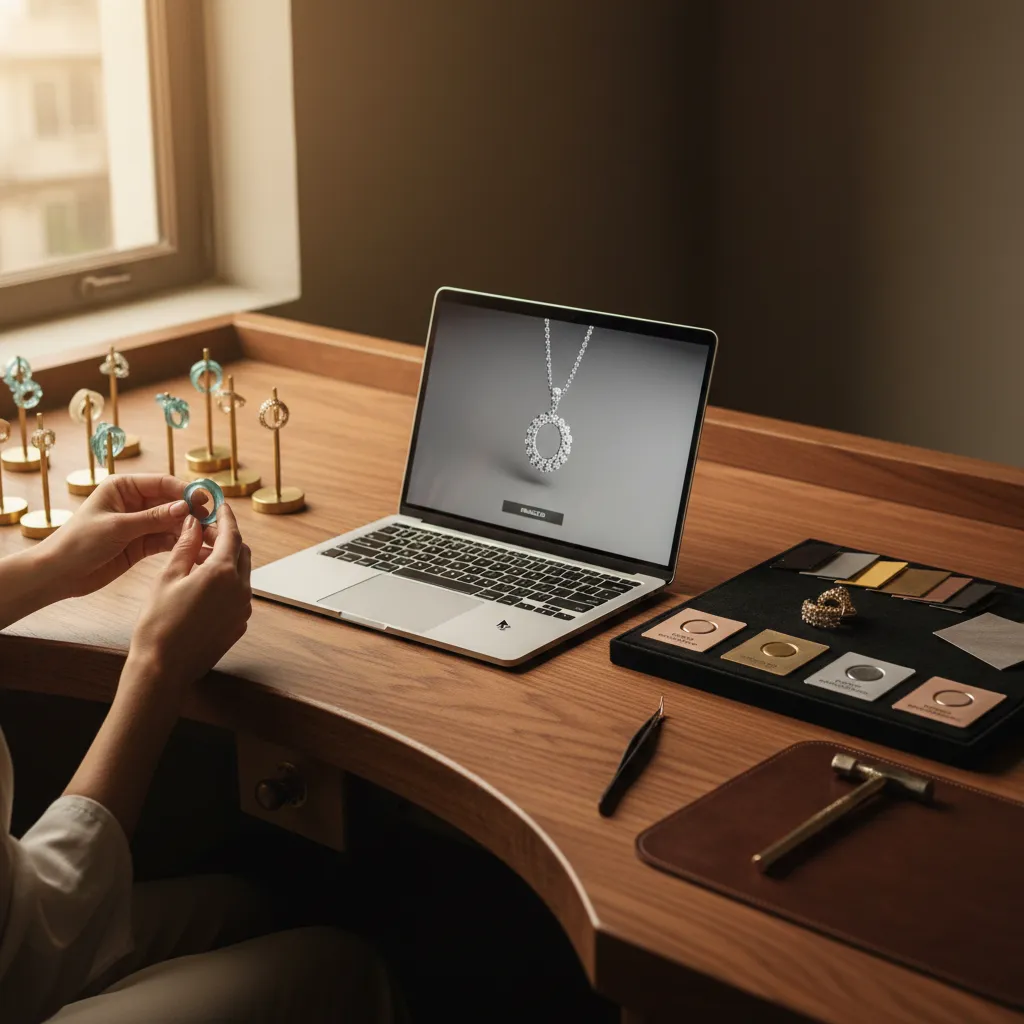
If your team is still building confidence in digital workflows, Royi Sal Jewelry’s educational content on 3d jewelry design is a useful starting point. The key is not software for its own sake. The key is using digital review to confirm what the piece should be before it enters the more time-sensitive sampling stage.
4. Design for repeatability, not just first-sample appeal
A sample can look promising while still being difficult to reproduce consistently in a production run. That is why your OEM partner should be able to discuss repeatability, not just aesthetics. Ask whether the design logic supports reliable manufacturing and whether any details may require refinement before scaling.
Brands often benefit from asking two separate questions: “Does this look right?” and “Can this be made consistently at run volume?” Those are not always the same question. The stronger the OEM relationship, the more likely you are to get useful feedback before committing to the next stage.
5. Define revision rules before the first sample is approved
Design revisions are normal in custom manufacturing. Problems usually emerge when brands do not define who approves changes, what level of change requires rework, and how many review rounds are realistic for the project scope.
A disciplined approval structure may help control schedule drift. For example, your team might approve overall silhouette first, then detail refinement, then branding placement, then final pre-production sign-off. That kind of sequencing is often more efficient than trying to solve every issue at once.
6. Connect design choices to after-sale performance
OEM planning should not stop at the visual concept. You should also consider how the finished product may perform in regular use, storage, merchandising, and fulfillment. Design details that seem minor during development can affect long-term customer satisfaction and reorder confidence.
That is one reason educational topics such as how to make gold plated jewelry last, how to maintain brass jewelry, and how to wear brass jewelry can be commercially relevant to B2B brands. Care expectations, wear patterns, and customer education may shape the kinds of products you choose to develop and how you support them in the market.
7. Choose a partner that can discuss design tradeoffs honestly
The most useful OEM partner is not the one that agrees with every request immediately. It is the one that can explain where a design may need adjustment because of production logic, timing, or collection strategy. Honest early feedback may save substantial cost and frustration later.
Royi Sal Jewelry’s positioning as a custom design and manufacturing partner reflects that collaborative model. The business serves wholesale and private label clients and emphasizes consultation, craftsmanship, and international service capability. For brands comparing design-first resources, the broader Jewelry Design section offers context on how design development supports commercial production.
What to Prepare Before You Contact an OEM Partner
OEM conversations move faster when your inputs are defined in business terms, not only creative terms. Most development friction shows up when a partner is asked to estimate feasibility without enough context, then the project shifts after sampling begins. A short pre-brief can prevent that, and it also helps you compare partners more fairly.
Start with positioning and scope. Define your target customer, your price positioning in the market, and the role this collection plays in your assortment. Then clarify scope, for example how many styles you want to develop first, which styles are expected to become long-term reorders, and whether you are testing categories or building a permanent core line. A partner can give more useful guidance when they understand whether the goal is a limited launch, a seasonless program, or a scalable platform.
Bring reference direction that is organized, not overwhelming. A few clear references per style, along with notes about what you want to copy versus what you want to avoid, often works better than sending a large mood board without priorities. If you have sketches, dimensions, or early CAD, include them, but also state what “success” looks like for the first sampling round. Success might mean silhouette accuracy, proportion confirmation, or an approved direction that can be refined, rather than expecting a perfect final on round one.
A factor that often gets underestimated is documentation discipline. You will want version control for files and photos, a simple decision log of what changed and why, and a clear statement of who is authorized to approve changes. If multiple stakeholders are giving feedback, align internally before you send consolidated notes. OEM partners can respond more effectively when they are not receiving conflicting instructions across emails, messages, and separate attachments.
Competitors often emphasize commercial inputs early, and for good reason. You should be ready to discuss minimum order quantity expectations at a high level, how you plan to reorder if a style performs, and how assortment planning affects manufacturability. A collection that is designed as a coherent system, shared components, consistent dimensions, repeatable details, is often easier to produce and manage over time than a set of unrelated one-off concepts. From a production standpoint, your ability to plan reorders and manage SKUs can influence development decisions well before you reach final approvals.
Who These Tips Matter Most For
These design principles are especially relevant for emerging jewelry brands, boutique owners launching a private label line, and fashion businesses expanding into accessories. They also matter for established companies that have outgrown transactional sourcing and need a more structured OEM relationship.
If your business depends on custom product identity rather than off-the-shelf wholesale buying, your design process becomes a core operational function. The stakes are higher if you have multiple stakeholders, seasonal launch schedules, or plans to build repeatable hero styles across future collections.
Brands moving from concept-stage experimentation into more disciplined assortment planning tend to benefit most. At that point, design quality is not only about creativity. It becomes part of production planning, quality control, and margin protection.
A Practical Resource for Brand Development
For brands that want a more collaborative OEM process, Royi Sal Jewelry is one useful partner to evaluate. The company focuses on custom jewelry design and manufacturing for B2B clients, including wholesale and private label businesses. It is led by Royi Gal, whose background combines design and manufacturing knowledge, which is valuable when a project needs both creative direction and production realism.
The company’s service model emphasizes consultation, craftsmanship, and partnership rather than a simple order-taking approach. That may be a good fit if your team needs help translating concept ideas into a manufacturing-ready brief, reviewing revisions, and preparing for production with global fulfillment considerations in mind. You can explore Royi Sal Jewelry’s design process at royisal.com or contact the team to discuss a custom collection brief and how a collaborative OEM workflow might support your brand.
How to Evaluate an OEM Partner Through the Design Process
Many brands evaluate OEM partners mainly by sample appearance or quoted capabilities. That can be too narrow. A stronger evaluation process looks at how the partner handles communication, design interpretation, revision discipline, and long-term scalability.
1. Assess design translation ability
Ask how the partner moves from reference images or sketches into a defined development path. You want evidence that they can interpret brand intent, not just accept files and return a sample. This is especially important if your internal team is still refining technical communication.
2. Review how collaboration actually works
A capable OEM partner should be able to explain consultation steps, revision expectations, and approval stages. If the process sounds vague, the project may become heavily dependent on reactive problem-solving. Strong communication usually does not guarantee an easy project, but it often makes issues easier to identify earlier.
3. Ask whether the partner can support private label growth
Your first collection is only part of the decision. Consider whether the OEM relationship could support future launches, reorders, design updates, and line expansion. Brands with growth plans should evaluate the partner as an ongoing operational resource, not only a one-time developer.
4. Examine realism around timing and complexity
Trustworthy partners usually speak carefully about timelines because custom manufacturing depends on project scope, approvals, revision cycles, and production planning. If every answer sounds instant or effortless, that should prompt more questions. Reliable manufacturing partnerships often begin with realistic expectations, not optimistic shortcuts.
5. Look for balanced feedback, not just agreement
A productive OEM relationship often includes candid guidance on what may need refining. You want a team that can explain tradeoffs around design ambition, production consistency, and commercial viability. That kind of feedback may feel slower at first, but it often supports better launch decisions.
Common OEM Partnership Breakdowns (and How to Prevent Them)
Even strong OEM partners can struggle with a project if the working structure is unclear. Most breakdowns are not dramatic, they are slow accumulations of misalignment: unclear feedback, shifting priorities, and assumptions about what a “finished” sample actually represents.
One common failure point is communication cadence. If you do not define how often updates should happen, who is included, and what the partner is waiting on, you can end up with long quiet stretches followed by urgent decision requests. In practice, a simple cadence with clear owners, such as a weekly checkpoint during active sampling, can prevent stalled decisions and reduce the need for rushed approvals.
Late-stage design changes are another frequent issue. A brand may approve a direction, then internal stakeholders see the sample and ask for foundational changes. That often forces the project backward. Prevention usually starts on your side: align stakeholders before sending feedback, confirm which elements are non-negotiable, and separate aesthetic preferences from functional requirements. If a change is truly necessary, agree on whether it is a revision within the existing direction or a technical redesign that requires a new sampling plan.
Another breakdown is assuming that a good-looking sample equals production readiness. A sample may validate overall aesthetics, but it might still need refinement to support consistent manufacturing. Sampling is proof of concept, while production is proof of repeatability. You and your partner should agree on what must be confirmed before moving forward, including what details are “approved” versus “pending production validation.”
Misaligned expectations on capabilities can also appear when a brand assumes a partner can execute any reference image exactly as shown. Strong partners will typically explain tradeoffs and constraints, but you still need a shared definition of what is achievable within your project’s parameters. The more you rely on “make it like this” without defining measurable requirements, the more room there is for interpretation.
Prevention tactics often look like structured checkpoints and escalation paths. Define the stages where decisions are locked, such as silhouette approval, detail approval, branding placement approval, and final pre-production sign-off. Agree upfront on what triggers a resample versus a minor adjustment, and how those decisions will be made. You do not need an overly complex system, but you do need shared rules so the project does not become an open-ended revision loop.
To protect your time and budget, set boundaries on revisions and clarify deliverables at each stage. For example, you might decide that each round of feedback must be consolidated, submitted in one document, and limited to the specific stage being reviewed. That structure keeps development moving and reduces the risk of inconsistent instructions. It also makes it easier for a partner to support you as a true collaborator, which is where experienced design and manufacturing guidance can be most valuable.
Strengths and Considerations
Strengths
- A disciplined design process may reduce interpretation errors before production begins.
- Clear briefs and staged approvals often support more efficient sampling and revision control.
- Design-led OEM planning can improve collection consistency across multiple styles.
- Partners with both design and manufacturing understanding may provide more practical feedback during development.
- Strong collaboration can help brands prepare not only for launch, but also for reorders and future assortment growth.
Considerations
- Custom design work usually takes more coordination than buying ready-made wholesale products.
- Revision rounds may extend timelines depending on the complexity of the concept and the clarity of approvals.
- Not every visually appealing idea will be ideal for repeatable production without adjustment.
- Brand teams may need to invest more time upfront in briefing, reviewing, and documenting decisions.
Frequently Asked Questions
What does an OEM partner do for a jewelry brand?
An OEM partner typically manufactures jewelry based on the brand’s concept, design direction, or approved development files. In many cases, the relationship may also include consultation, sampling, revisions, and production planning. For B2B brands, the best-fit partner is often one that can help translate creative ideas into a process that is manageable at production level, not just make a one-off sample.
Why are design tips relevant if the manufacturer handles production?
Production quality often starts with design clarity. If your brief leaves room for interpretation, the manufacturer may still produce a sample, but the result may not match brand expectations or scale easily into a production run. Better design discipline can improve communication, reduce avoidable revisions, and create a stronger foundation for wholesale or private label execution.
Should a jewelry brand use 3D design before sampling?
Many brands find that digital development helps them review proportion, structure, and visual alignment before a physical sample is made. It may not remove all development risk, but it can create a more controlled review stage. That is especially useful if several stakeholders need to approve a style before production planning moves forward.
How detailed should a jewelry design brief be?
A strong brief is usually detailed enough to explain visual intent, functional priorities, reference direction, and revision boundaries. It should identify what cannot change and where the OEM partner has room to recommend adjustments. The more commercially important the collection is, the more useful it becomes to document decisions clearly from the beginning.
Can an OEM partner help improve my jewelry design ideas?
In many cases, yes, especially if the partner has both design and manufacturing experience. That said, improvement does not always mean making a design more elaborate. It may mean clarifying proportions, simplifying difficult details, or refining the concept so it is easier to sample, approve, and reproduce consistently within your business model.
What is the biggest mistake brands make during OEM development?
One common mistake is approving too much too quickly without a structured review process. Brands sometimes focus on whether the sample looks broadly acceptable and miss details that matter for production consistency. Another issue is changing core design direction late in development, which may increase cost, delay approvals, and create confusion across teams.
How do I know if an OEM partner is right for private label growth?
Look beyond the first sample. Ask how the partner handles revisions, production planning, ongoing communication, and future collection expansion. A strong private label fit usually involves more than manufacturing capacity. It often includes collaboration style, documentation discipline, and the ability to support your brand as requirements become more complex over time.
Is a collaborative manufacturer better than a low-touch supplier?
That depends on your internal capability and project complexity. If your team already has highly detailed technical files and a mature approval system, a lower-touch relationship may work in some cases. If you need help refining concepts, navigating revisions, or aligning design with production realities, a collaborative partner may provide more long-term value.
How should brands discuss timelines with an OEM partner?
Ask about process stages rather than expecting a single universal timeline. Sampling, revisions, final approvals, and production scheduling may all affect the timeline differently depending on your project. A reliable partner will usually frame timing in relation to scope and decision speed, rather than treating every custom project as identical.
How can I make my jewelry brand unique?
Uniqueness is usually the result of repeatable design decisions, not a single unusual detail. Brands tend to build distinction through a consistent design language, recognizable proportions, and a clear point of view that carries across an assortment. From an OEM standpoint, the practical way to protect uniqueness is to define what makes your brand identifiable, document it clearly, and avoid drifting into “customized standard” decisions that look similar to what many other brands are producing.
How do I create my own jewelry brand?
At a business level, creating a jewelry brand usually means defining positioning, product direction, and an operational plan that can support reorders. You will typically need a clear concept, an initial assortment plan, a structured design brief, and a development workflow that includes sampling and approvals. An OEM partner can support this process by helping translate your direction into manufacturing-ready development, but you will get better outcomes when your internal decisions are organized, your approvals are clear, and your first collection is designed with repeatability in mind.
How do I promote my jewelry business?
Promotion depends on your channel strategy, but product and operations still matter because they affect how consistently you can deliver what you market. Many brands focus on clear merchandising, strong product photography, and a coherent story around the collection, then support sales with reliable inventory planning and customer education. From a development perspective, it helps to create styles that are consistent enough to be reordered, photographed again, and marketed as part of a recognizable brand system, rather than relying only on one-time releases that are difficult to repeat.
Key Takeaways
- Strong OEM results often begin with stronger design communication, not only stronger production execution.
- A detailed design brief may reduce confusion, support better sampling, and improve alignment across teams.
- Digital development and staged approvals can help brands manage revisions more deliberately.
- The right OEM partner should discuss repeatability, scalability, and design tradeoffs honestly.
- Royi Sal Jewelry is a relevant resource for brands seeking a collaborative custom design and manufacturing relationship.
Conclusion
Design decisions shape far more than the look of a jewelry collection. They influence how clearly your vision is communicated, how efficiently your samples move forward, and how confidently your brand can scale a style into repeat production. If you are choosing an OEM partner, evaluate the design process with the same seriousness you apply to manufacturing capability. Brands that do this well often put themselves in a better position to control quality, protect brand consistency, and reduce expensive misunderstandings. If you want a collaborative B2B partner for custom jewelry design and manufacturing, visit royisal.com to learn more about the process or contact Royi Sal Jewelry to discuss your project brief.