What Does 925 Mean on Jewelry? (2026 Guide)
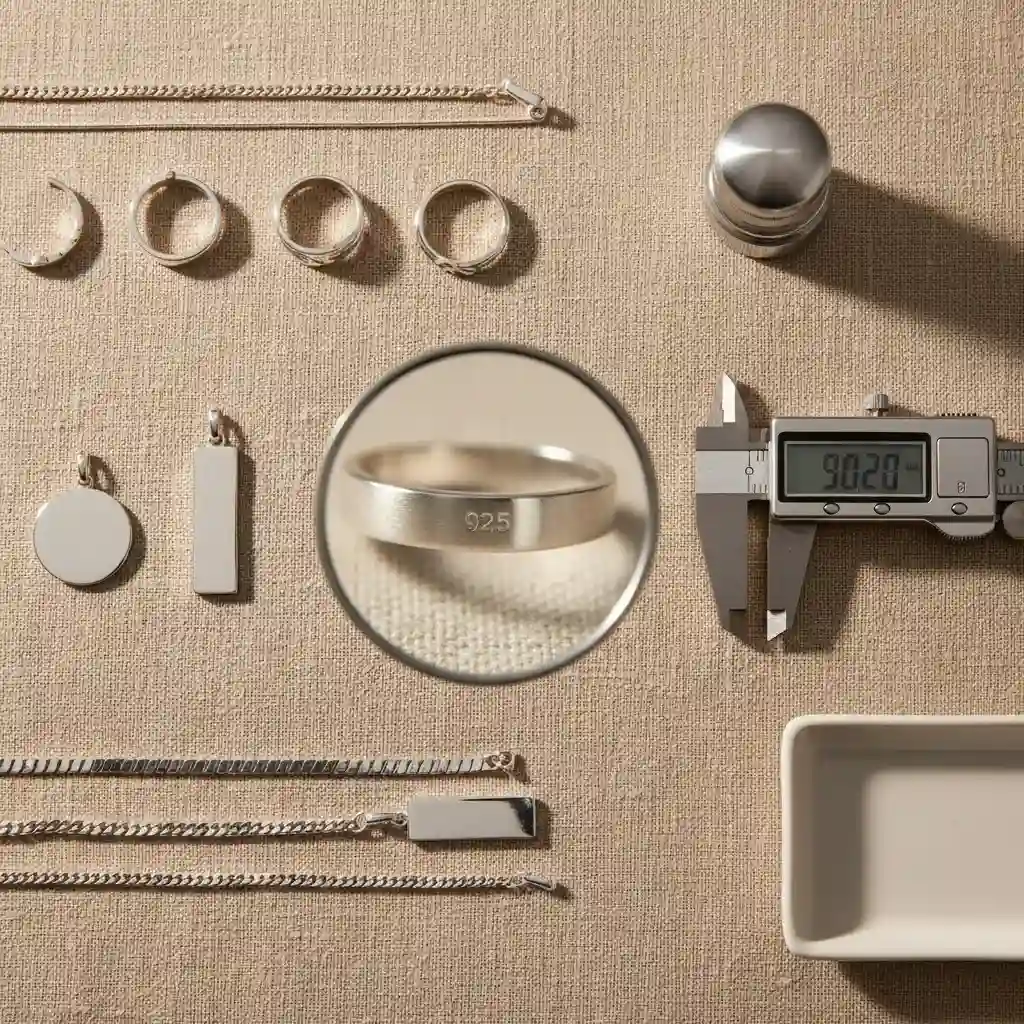
This article explains the 925 jewelry meaning in practical terms, what hallmarks can and cannot confirm, and what jewelry businesses should verify before moving forward with production or sourcing decisions.
What 925 Actually Means
The short answer to what does 925 mean on jewelry is this: the number 925 is commonly used to identify sterling silver. In practical terms, it indicates a metal standard associated with silver content. If you are reviewing supplier catalogs or sample specifications, the 925 sterling silver designation usually points to a sterling silver base rather than pure silver.
For many businesses, that number appears as part of a small stamp on a ring, pendant, bracelet, or component. You may also see related wording in technical sheets, factory quotations, or wholesale line sheets. This is where understanding what is 925 sterling silver becomes useful, because the stamp is often only one piece of the larger manufacturing picture.
Consider this, a hallmark is a marker, not a full product report. It helps identify the stated metal standard, but your team still needs to confirm how the piece is finished, whether there is plating involved, and how the supplier documents those details in production records.
Why businesses ask about 925 so often
The 925 stamp meaning matters most when you are doing one of three things: sourcing finished goods, developing a custom line, or reviewing sample approvals. In all three cases, your margin, brand positioning, and customer communication depend on material accuracy.
What many jewelry brands overlook is that internal understanding has to be consistent across departments. Your sourcing team, product development lead, e-commerce manager, and customer service staff should all interpret 925 the same way. If they do not, inconsistent listings and avoidable product questions often follow.
Common 925 Hallmarks and Variations You May See
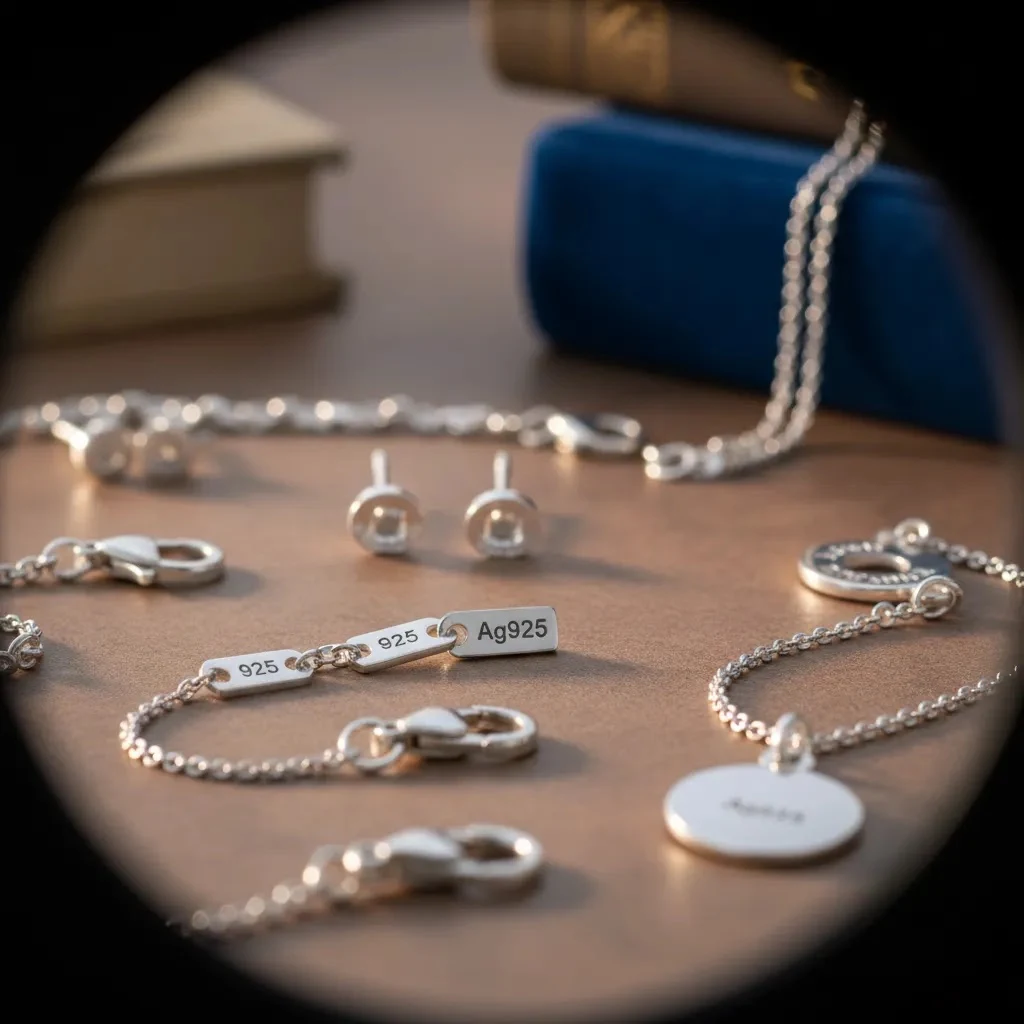
If you buy across multiple vendors or countries, you will rarely see 925 presented in only one way. In practice, you may receive samples stamped “925,” “.925,” or with slight variations like “S925.” You may also see abbreviations such as “STER,” “STG,” or shorthand that looks like “S.S.” on tags, cards, or internal supplier paperwork. The key point for business buyers is not memorizing every format. It is treating each of these as a metal identifier that still needs to match the supplier’s written specification for that SKU.
What experienced buyers know is that the stamp often appears alongside other identifiers. A maker’s mark, letter prefix, or small symbol can sit next to the number, which is why marks like “ag 925” and “bs 925” show up in real assortments. Those letters could be a factory identifier, brand stamp, or internal reference, but they are not self-explanatory without context. If you are onboarding a new supplier or approving a private label run, ask the supplier to clarify in writing what every character on the sample refers to, and how that same marking will be handled in bulk production.
From an internal operations standpoint, consider standardizing how your team records and interprets these variations. Your merchandising team might write “sterling silver,” your receiving team might log “S925,” and your e-commerce team might copy “.925” straight from a photo. That is how inconsistent naming starts. A simple internal rule helps, define your preferred customer-facing term, define how you will record stamp variations in SKU notes, and make sure supplier documentation uses the same language on invoices and spec sheets. Consistency here protects your line sheets, product pages, and wholesale communication from avoidable confusion.
Why Hallmarks Matter in B2B Jewelry
In business-to-business jewelry operations, hallmarks serve as reference points. They help your team identify how a piece is represented and can support internal tracking during quality checks, receiving, and cataloging. If you are building a silver assortment, the what is sterling silver question is not just educational. It ties directly to merchandising, compliance review, and supplier communication.
From a production standpoint, a hallmark may also influence mold planning, sample labeling, and final packaging decisions. If you sell into boutiques or department store channels, your buyers may expect consistency between the stamp on the piece and the wording on invoices, product cards, and technical documentation.
Hallmarks support cleaner communication
Think of it this way, a hallmark functions like shorthand in the supply chain. It can help everyone involved speak the same language, from the factory floor to the wholesale sales team. That said, it only works when the supplier’s paperwork and actual production practices match the marking.
For brands working with a collaborative manufacturing partner, these details are usually addressed early in development. Royi Sal Jewelry, for example, positions its work around custom jewelry design and manufacturing collaboration for B2B clients, which is exactly the stage where metal labeling, sample review, and specification clarity should be discussed before larger production decisions are made.
Sterling Silver vs 925 Silver vs Pure Silver: What Changes in Practice
For most buyers, “sterling silver” and “925 silver” are used interchangeably in the market. In many wholesale and manufacturing conversations, 925 is simply the numeric way to reference the same standard. That has practical implications for your back-end setup. If your supplier uses “925” on quotations but your line sheet uses “sterling silver,” make sure your SKU naming, spec sheets, and invoices still line up. The goal is that your internal records and your retail partner-facing materials describe the same product standard, even if the wording varies.
It also helps to separate sterling from “pure” or “fine” silver in your category language. Pure silver is generally treated as a different category than sterling in both merchandising and production conversations. From a production standpoint, the working properties and durability expectations can differ, which may affect how easily certain designs are manufactured, how well they hold up in day-to-day wear, and how consistently a factory can repeat the output at scale. You do not need to turn this into a chemistry lesson. You do need a clear internal rule, if you are selling “sterling,” then your documentation, stamp expectations, and product copy should not drift into “pure silver” language unless your supplier has specified it clearly.
For brand positioning, this choice affects how you talk about your “silver” assortment across wholesale and private label. Consider this, are you going to label a category as “silver jewelry,” “sterling silver jewelry,” or “925 silver jewelry,” and will that be consistent across your website, line sheets, packaging, and product cards? Once you choose a standard term, use it consistently, and keep “925” as a supporting technical identifier in specs and internal notes. That approach usually reduces buyer questions and keeps your product content aligned with the way factories and suppliers document materials.
What a 925 Stamp Does Not Confirm
This is where many sourcing problems begin. A 925 stamp can indicate a sterling silver standard, but it does not automatically verify every aspect of the finished item. If you are asking what do the numbers 925 mean on jewelry, it helps to pair that question with another one: what is still unknown after you see the stamp?
The reality is, a hallmark alone does not typically confirm:
- Whether the piece includes surface plating
- The thickness or durability of any added finish
- The construction method used for the item
- How components are joined or assembled
- Whether all parts of the piece share the same metal specification
- How the supplier documents quality control
Now, when it comes to supplier evaluation, this distinction matters. A product can be marked 925 and still differ significantly from another 925 item in weight, finishing quality, consistency, and production suitability for your target price point or market channel.
Why this matters for private label brands
If you are launching a branded collection, you need more than a correct stamp. You need dependable documentation and repeatable production standards. This becomes especially important if you are comparing custom vs ready made jewelry comprehensive guide considerations, because material markings play a different role in stock sourcing than they do in fully custom development.
Custom work often requires deeper communication around molds, approvals, finishing expectations, and sample revisions. In that setting, the 925 jewelry meaning is foundational, but not sufficient on its own.

Can 925 Jewelry Be Fake? How B2B Buyers Reduce Risk
Yes, it can happen. A 925 stamp should be treated as a claim to be verified, not as proof on its own. In wholesale and private label, the risk is not only intentional misrepresentation. It can also be inconsistent marking practices across factories, mixed-component construction that is not explained clearly, or listings that copy wording from older SKUs without updating the real specification.
From a process standpoint, your best defense is building a verification workflow that connects samples, documentation, and bulk production. Start by making sure the supplier’s documentation is aligned across the places where errors typically show up: quotation language, spec sheet notes, invoice descriptions, packaging labels, and any product cards. If those documents disagree, the stamp on the product will not save you in a buyer dispute or a retail partner question.
Sample-to-bulk consistency controls matter just as much. In practice, you want an approval standard that covers: the exact hallmark or marking approach expected on bulk units, how that will be applied across different sizes or components, and what happens if the factory needs to change placement due to manufacturing constraints. If you approve a sample that is stamped one way, but bulk arrives with a different stamp or no stamp at all, you now have a labeling and trust issue, not only a technical detail.
If a received batch conflicts with the stamp or the supplier’s paperwork, pause before you reorder. Document what you received with photos and SKU-level notes, compare it to the approved sample record, and communicate the discrepancy clearly in writing. The goal is resolution before scaling, whether that means correction, replacement, or an agreed update to your documentation and labeling standard. What many brand owners overlook is that your long-term risk is usually not the first order. It is repeating the same mistake across multiple reorders because the process was never tightened after the first inconsistency appeared.
What Does 925 Mean on Gold Jewelry
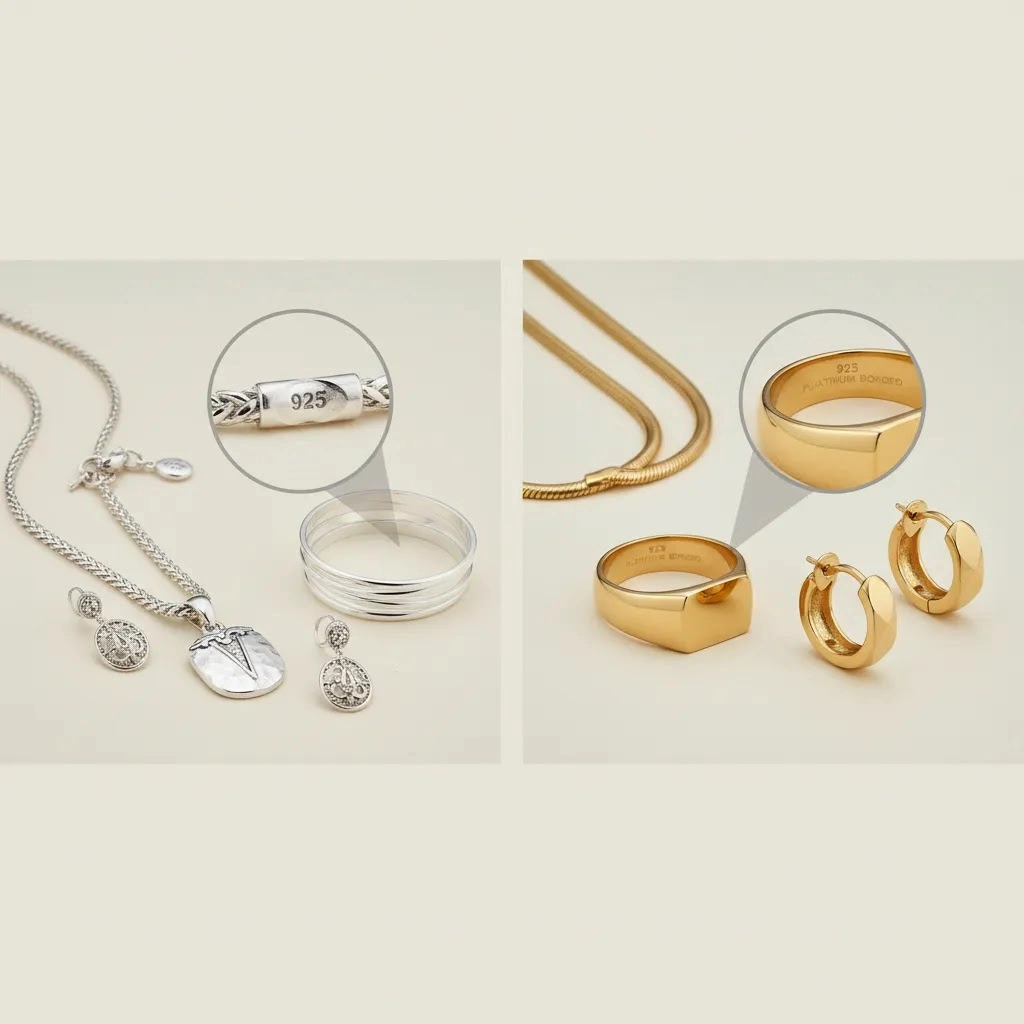
One of the most common questions from growing brands is what does 925 mean on gold jewelry. In many cases, if a gold-colored item carries a 925 stamp, the stamp may refer to the underlying sterling silver base rather than solid gold content. The gold appearance could be related to a surface finish or plating over silver, but you should never assume those details without supplier confirmation.
In practice, this means your product listings and internal SKU notes need to be precise. If your team labels a piece as gold jewelry without clarifying the base material and finish, you could create confusion for retail partners and end customers later.
Why wording matters in wholesale and private label
If you sell business-to-business, inaccurate wording can affect buyer trust. A boutique owner reading a line sheet may interpret “gold jewelry” very differently from “gold-tone over a 925 base,” depending on how your brand presents specifications. This is why product development teams need shared naming rules from the start.
Royi Sal Jewelry works in the custom design and manufacturing space where these specification conversations are part of responsible collaboration. For B2B brands, that is a helpful reminder that metal base, finish description, and hallmark language should all be aligned before products move into larger production planning.
How to Check Supplier Claims Before Production
If you are sourcing jewelry marked 925, do not stop at the stamp. Ask for the documentation and sample information that support the claim. What many jewelry brands overlook is that quality issues often start with assumptions made during the quotation stage, long before any bulk order is placed.
A practical verification checklist
Before approving development or production, ask your supplier to clarify:
- What the 925 mark refers to on the specific item
- Whether the item includes any added finish or surface treatment
- How the piece will be labeled in production documents and invoices
- Whether samples and bulk units will carry the same hallmark approach
- Which components are covered by the stated metal specification
- What quality control steps are used before shipment
These questions are especially useful if you are reviewing a new factory, comparing offshore partners, or building your first silver category. If your team is moving toward custom development, the article on crafting crown jewels guide bespoke jewelry design manufacturing brands can help you think more broadly about how design intent and manufacturing communication connect.
Documentation beats assumptions
A reliable supplier should be able to explain how the item is specified, manufactured, and presented to your business. That does not mean every factory will use the same paperwork format, but it does mean you should receive enough clarity to make an informed decision.
If you are still learning how suppliers structure these conversations, the broader Jewelry Manufacturing section can help frame how material specifications fit into the larger production process.
Using 925 Knowledge in Product Development
Understanding what does the number 925 mean on jewelry helps your business do more than identify metal. It helps you write better briefs, reduce internal confusion, and avoid weak product descriptions. This matters whether you are sourcing finished pieces wholesale or building a private label line from scratch.
For example, if your team is creating a silver-based collection, you need alignment on sample labels, website copy, buyer sheets, packaging language, and quality control notes. A vague understanding of 925 on jewelry often leads to messy communication later, especially once sales teams start presenting the line to retail accounts.
Where this fits into the bigger sourcing strategy
Think of material literacy as part of brand infrastructure. It supports cleaner sourcing conversations and more confident decision-making. The 925 Sterling Silver category is a useful reference point if you are building foundational knowledge for a silver assortment or training newer team members.
For brands developing custom collections, Royi Sal Jewelry represents the kind of manufacturing partner that can help translate design goals into production-ready specifications through a collaborative process. That is especially valuable when you are balancing aesthetics, consistency, and documentation across multiple SKUs or launch phases.
And if you are operating in the broader Jewelry Business space, knowing how to interpret hallmark language can improve both sourcing discipline and customer-facing accuracy as your assortment grows.
Frequently Asked Questions
Does a 925 stamp automatically prove the entire piece is sterling silver?
Not necessarily. A 925 stamp is commonly used to indicate a sterling silver standard, but for a business buyer, it should be treated as one data point rather than final proof of every construction detail. Components, findings, finishes, and assembled parts may need separate clarification depending on the product. In a sourcing or manufacturing context, you should ask how the supplier applies the mark, what it refers to on that specific SKU, and whether documentation matches the physical item and product listing.
What does 925 mean on silver jewelry in a wholesale catalog?
In a wholesale catalog, 925 usually signals that the item is represented as sterling silver. That said, the way suppliers describe products can vary. Some use brief shorthand in line sheets, while others provide fuller technical notes. If you are buying for resale or private label, confirm what the 925 mark covers, how the item will be invoiced, and whether there are any coatings or finishes that should also appear in your product description. Clear wholesale terminology helps avoid confusion later with retail partners.
What does 925 mean on gold jewelry if the piece looks yellow?
If a jewelry item looks gold but carries a 925 stamp, the mark may refer to a sterling silver base under a gold-colored finish. For a business owner, the key issue is not appearance alone but how the product is documented and sold. Your supplier should explain the base metal, surface finish, and the wording you should use in line sheets, product cards, and e-commerce listings. This is especially important if you sell to stores that expect clear and accurate material descriptions.
What does ag 925 mean on jewelry?
“Ag” is a common abbreviation for silver in technical contexts, so ag 925 on jewelry generally points to silver associated with the sterling standard. In business use, though, you should still verify how the mark is being applied on a particular item. Different suppliers may combine letters, numbers, maker marks, or factory identifiers. If you are developing a collection, ask your manufacturer to explain every mark used on the sample so your internal records and customer-facing descriptions stay accurate.
What does bs 925 mean on jewelry?
When you see a marking like bs 925, the 925 portion may indicate sterling silver, while the letters could refer to a brand, factory, maker’s mark, or internal identifier. The letters themselves do not have a universal meaning without context. For B2B buyers, this is a reminder that hallmark interpretation should not rely on guesswork. Request a written explanation from the supplier and make sure the same information appears in your product specifications, especially if you are preparing goods for retail distribution or private label sales.
Is 925 jewelry worth anything?
For a business, “worth” depends on context. A 925 mark typically indicates an item represented as sterling silver, which often carries more inherent material value than lower-silver or non-silver alternatives. That said, resale value and wholesale value are not the same thing. Your actual commercial value depends on design, workmanship, brand positioning, finishing quality, and whether your supplier documentation supports the claim consistently across samples and bulk.
Can jewelry marked 925 be fake?
Yes. A 925 stamp can be used correctly, used inconsistently, or applied in a misleading way. B2B buyers reduce risk by tying the stamp to documentation and process controls, including clear spec sheets, sample approval records, and consistency checks between sample and bulk. Treat the stamp as an identifier to verify, not as a guarantee on its own.
Is 925 silver good quality?
It can be, but quality is broader than purity marking. 925 generally refers to a recognized sterling silver standard, yet two items with the same stamp can perform very differently depending on construction, finishing, assembly, and quality control. For wholesale and private label, “good quality” usually means consistent execution that matches your approved sample and holds up to the expectations of your market channel.
Is 925 silver pawnable?
Some pawn operations may accept items represented as sterling silver, but policies vary by location and by the buyer’s verification methods. For brands, a more relevant takeaway is that secondary-market acceptance is not a substitute for proper sourcing verification. If you need confidence in material representation, rely on supplier documentation and your internal QC process rather than assuming the stamp will be treated as proof in every setting.
Should jewelry brands rely on hallmarks alone during supplier onboarding?
No. Hallmarks are helpful, but they should be part of a broader onboarding and verification process. During supplier review, you should assess sample consistency, spec sheet clarity, finish descriptions, communication quality, and quality control practices. A stamp may support a supplier’s claim, but it does not replace documentation or a well-run approval process. If you are scaling a collection, stronger onboarding standards can reduce avoidable errors in production, catalog creation, and customer service after launch.
How should a private label brand describe 925 items in product content?
Your product content should reflect the exact material information confirmed by your supplier. If the piece is represented as sterling silver, use wording that aligns with your documentation and the actual item. If the product has a different visible finish, make sure your description does not blur the difference between base material and appearance. The goal is consistency across your website, wholesale line sheet, packaging, and internal inventory records. Clear naming protects your brand and helps retail partners communicate accurately with their own customers.
Can two 925 pieces differ in quality even if both carry the same stamp?
Yes, and this is a major point for B2B buyers. Two items can both be marked 925 yet vary in construction quality, finish consistency, weight, detailing, and durability in day-to-day use. That is why sourcing decisions should include more than material identification. Review sample execution, assembly quality, finishing standards, and how well the supplier maintains consistency from sample stage to production stage. For businesses, long-term success depends on repeatable output, not just a correct number stamped on the product.
How does understanding 925 help during custom jewelry development?
It helps you brief your manufacturer more clearly and avoid avoidable miscommunication. When your team understands what 925 means, you can write more accurate design notes, ask better questions during sampling, and create cleaner product content once the collection is approved. This becomes even more important in custom work, where the supplier is translating your concept into a production-ready item. Strong material literacy supports better documentation, smoother approvals, and fewer surprises once the collection moves toward larger runs.
Where should a growing jewelry business start if its team is new to silver terminology?
Start with foundational education, then connect that knowledge to your sourcing process. Your team should understand basic hallmark terminology, how suppliers present metal information, and what questions to ask during quotations and sample reviews. After that, build internal standards for product naming, spec sheet review, and supplier documentation. A business that treats material language seriously is usually better prepared to scale. If you need a collaborative manufacturing perspective, visiting royisal.com can help you understand how custom development discussions are typically structured.
Key Takeaways
- 925 is commonly used to indicate a sterling silver standard, but the stamp should be treated as one part of a larger product review.
- A hallmark may help identify metal representation, but it does not automatically confirm finish, construction method, or full component details.
- If a piece looks gold and carries a 925 mark, your team should verify the base material and finish before writing product copy or selling wholesale.
- Documentation matters just as much as the physical stamp when you are sourcing, sampling, or developing a private label line.
- For growing brands, understanding hallmark language supports clearer supplier communication, stronger product descriptions, and better quality control.
Conclusion
If you have been asking what does 925 mean on jewelry, the answer is useful, but it is only the starting point. For a jewelry business, the real value comes from knowing how to apply that information during sourcing, sampling, specification review, and product communication. A 925 stamp can point you in the right direction, yet strong decision-making still depends on supplier transparency, documentation, and internal consistency across your team.
The reality is that hallmark knowledge becomes more important as your brand grows. It helps you compare suppliers more carefully, write more accurate product content, and reduce confusion between design intent and final production details. If you are building a silver assortment or planning a custom collection, your next step may be to review your current spec sheets and supplier language for gaps. To explore how a collaborative manufacturing relationship works in practice, visit royisal.com or reach out to Royi Sal Jewelry to discuss your project requirements.