Wholesale Sterling Silver Toe Rings (2026 Guide)

Why toe rings can work as a niche wholesale category
Toe rings are rarely the anchor of a jewelry business. That is exactly why they can be useful. In many collections, niche pieces work best as supporting products that add breadth without demanding the same inventory depth as a core ring or necklace program.
Consider this, if your customer base shops for vacation, gifting, layering, or trend-led accessories, toe rings may help you create a more complete assortment. They can also support merchandising stories built around seasonal styling, destination wear, or body jewelry extensions. From a production standpoint, niche items are most successful when they are treated as a strategic add-on category, not as an afterthought.
What many jewelry brands overlook is that small products still require disciplined sourcing. A toe ring that looks simple in photos may still raise questions about fit range, consistency, finishing, comfort, and packaging. Buyers who approach the category casually often end up with uneven results.
If your broader assortment already includes sterling silver rings wholesale options, toe rings can complement that offering without forcing you into a completely separate sourcing model. The key is to define where the category sits in your business. Is it an impulse add-on, a seasonal feature, or an entry-level private label test? The answer shapes everything from units per style to sampling expectations.
How to evaluate suppliers before ordering
When you source wholesale sterling silver toe rings, the supplier review process should be as structured as it would be for any larger category. Small ticket items can create just as many operational problems as high-value pieces if the supplier cannot maintain consistency.
Start with process clarity, not just product photos
A catalog image tells you very little about how a supplier works. You need to understand whether they can support sampling, revisions, repeat production, and clear communication around specifications. The reality is that a niche category becomes difficult fast when your supplier cannot answer basic production questions in a consistent way.
For B2B buyers, useful evaluation points often include:
- How clearly the supplier documents styles, dimensions, and finish expectations
- Whether sampling is available before production approval
- How repeat orders are controlled for consistency
- What quality check process is used before shipment
- How packaging, labeling, and fulfillment requirements are handled
Look beyond category overlap
Some suppliers may offer toe rings simply because they already sell related silver products. That can be useful, but category overlap alone is not enough. If you are also reviewing wholesale 925 silver rings, do not assume toe ring production standards are automatically the same. Fit and wear expectations differ, and the tolerance for discomfort or poor finishing is lower because the product sits close to the skin and often gets worn in warm-weather settings.
Think of it this way, the supplier you want is not just one that can make the item. You want one that can understand how the item performs inside your retail model.
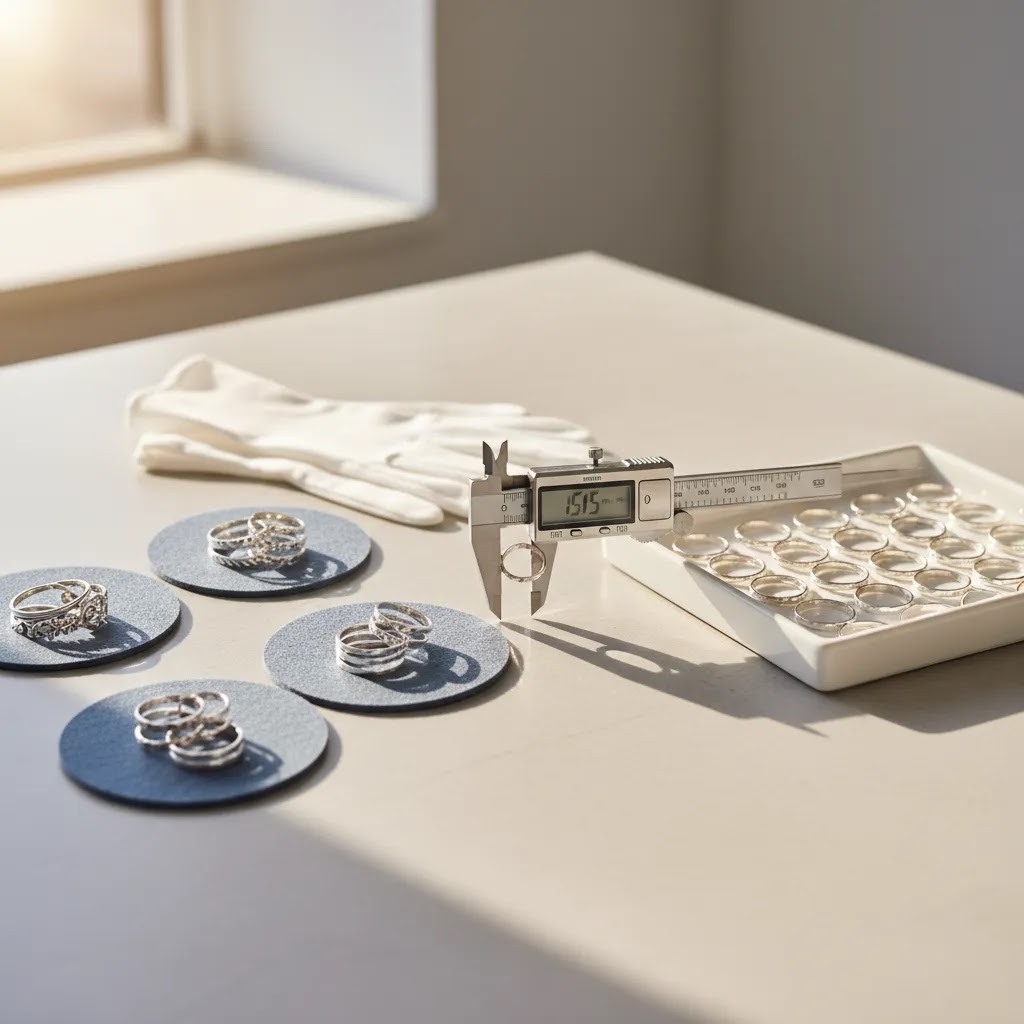
What product specifications you need to define
Many sourcing issues begin with weak briefing. A buyer asks for silver toe rings, the supplier sends something close, and everyone realizes too late that they were not talking about the same product. Strong briefs reduce that risk.
Define the commercial purpose of the style
Before you discuss production, decide what the item is supposed to do in your assortment. Is it a minimalist basic, a resort-themed accent, a stackable style, or a design-led statement piece? A toe ring developed for broad everyday appeal will likely require different design decisions than one built for a trend capsule.
Clarify the details that affect sell-through
In practice, this means documenting more than the look. You should define:
- Target customer and intended use case
- Open or fixed fit concept
- Design width and visual weight
- Surface texture or decorative features
- Comfort expectations and edge smoothness
- Brand packaging or private label requirements
Now, when it comes to assortment building, related categories matter too. If you already carry wholesale sterling silver rings with stones, or you are expanding into wholesale gemstone jewelry, your toe ring styles should still feel connected to the rest of the line. That might mean aligning silhouette language, decorative motifs, or merchandising stories instead of treating the product as a one-off novelty.
Here is the thing, sourcing works better when the supplier receives a complete commercial brief, not just a reference image.
Stock vs fitted vs adjustable toe rings, what it means for wholesale ordering
Toe rings are a fit-sensitive product, and fit is not only a customer experience issue. It is an inventory architecture issue. Before you place a wholesale order, clarify which fit approach you are buying, because each one changes how you plan SKUs, how you label product pages, and how you handle customer questions.
In the wholesale market, you will usually see three fit architectures. First is a fixed-size, closed-circle style, which functions more like a traditional ring and may be sold in defined sizes. Second is a fitted open design, where the ring has a gap but is intended to sit in a specific shape and range with minimal bending. Third is an adjustable open-gap design, which is built to flex for a broader fit range. The business trade-offs are real. Fixed sizes can create more SKU complexity and more sizing guidance needs. Fitted open designs can reduce SKU count, but you still need clear customer messaging about how it should sit and whether it should be adjusted. Adjustable designs may lower sizing friction, but they can increase quality scrutiny around shape retention, comfort at the opening, and how the piece looks after handling.
What experienced buyers know is that words like “adjustable” and “open” can mean different things to different teams. To avoid misalignment, document your internal definition in the spec. That typically includes the intended opening width range, the expectation for how well the piece holds shape after normal try-on, and comfort priorities like edge finishing at the gap. You should also define how the ring is meant to sit on a toe in wear, such as where the opening is oriented and whether the profile should look symmetrical when viewed from above. This gives the supplier a clear target and gives your internal team a reference for merchandising and customer support.
For assortment planning, keep the first test simple. In many cases, carrying one primary fit type in a first launch reduces confusion and makes sell-through data easier to interpret. If you want to test more than one, consider limiting it to two fit types and make product naming and size labeling unambiguous. The goal is to prevent operational noise, where returns or complaints are driven by unclear fit messaging rather than the design itself.
Why sampling and quality control matter more than buyers expect
For niche categories, sampling is not a formality. It is your first real chance to test whether the piece works in the way your business needs it to. A sample can reveal issues that do not appear in drawings or listing photos, especially around proportion, finish consistency, and perceived value.
What to check in a toe ring sample
Fit comfort should be one of your first checks. Even if the design is visually strong, a piece that feels awkward or looks oversized on foot may not perform well at retail. You should also assess balance, shape retention, edge finish, and overall appearance under real merchandising conditions.
Finish consistency is another common problem area. Small pieces can show production variation quickly, especially if decorative details are involved. That is why it helps to review samples under direct light, in packaging, and next to the rest of your assortment. If your line includes broader silver jewelry programs, the toe ring should not look like it came from a different source entirely.
QC should match your reorder plans
If you expect to reorder, your first approved sample becomes a reference standard. From a production standpoint, this is critical. Without a defined approval point, repeat runs can drift in subtle ways that create problems on the sales floor or in fulfillment.
At Royi Sal Jewelry, the client-facing positioning emphasizes collaborative design consultation and manufacturing support for business clients, which reflects a process many serious buyers value. The goal is not simply making a piece once. It is creating a repeatable production framework that supports ongoing collection development.

How toe rings fit into a broader silver assortment
Wholesale sterling silver toe rings make more sense when they are part of an assortment plan, not an isolated buying decision. Your customer may discover the product because it feels niche or seasonal, but your business benefits most when it connects to your wider product architecture.
Use them to increase depth without overextending inventory
Toe rings can serve as low-complexity style extensions in a silver collection. They may support a summer capsule, a travel edit, or a merchandising table built around body adornment and ring layering. That allows you to test demand in a controlled way.
For some businesses, the smartest approach is pairing toe rings with familiar categories such as Wholesale Jewelry assortments or category-led silver programs under 925 Sterling Silver. This creates stronger internal merchandising logic and can simplify how your team plans launches, photography, and restocks.
Think about cross-selling from the start
If your team is already buying sterling silver rings, body jewelry, or gemstone-accented silver styles, the toe ring assortment should reflect the same brand point of view. The most effective niche products feel intentionally placed. They echo the line’s design direction, price architecture, and customer expectation.
Assortment discipline matters here. Too many weak variations can tie up cash. Too few, and the category may look underdeveloped. In many cases, a narrow launch with clear style roles gives you better data than a broad first order.
Assortment architecture for toe rings, style roles that typically sell
Many toe ring assortments fail for a simple reason, they are built as a random mix of designs instead of a small set of clear style roles. Competitor catalogs often show a wide range of visuals, minimalist bands, twisted looks, stackables, motif accents, and occasional statement shapes. Your job as a buyer is to translate that variety into a structure your store can actually merchandise and replenish.
A practical approach is to plan toe rings the same way you would plan a small ring capsule. Start with core basics that feel like everyday add-ons, then add a few texture or pattern variants that provide visual choice without changing the silhouette language. After that, consider a limited number of motif accents for seasonal storytelling and gifting moments, and cap the assortment with one or two small statement pieces that give the category a reason to exist on a merchandising table. This keeps the mix intentional and makes it easier to identify what is driving sales versus what is simply taking up space.
To avoid over-assorting, think in tiers. A good, better, best structure can help you control breadth while still covering different customer intents. The reality is that toe rings should typically feel connected to your main rings program, not separate from it. If your brand is clean and minimal, toe rings should follow that language. If your brand leans decorative, keep the same design cues. Consistency reduces the risk that toe rings look like an unrelated impulse purchase from a different supplier.
Merchandising and SKU hygiene matter more than most buyers expect for a niche product. Use naming conventions that reflect fit type and silhouette, so staff can answer questions quickly and product pages stay clear. Make sure photography communicates scale, since toe rings can look larger or smaller depending on angle. Group toe rings next to rings or other body jewelry categories in a way that encourages attachment, and keep variants organized by role, not just by design name. This is how you make a small category feel professional and commercially planned.
When custom development makes more sense than stock sourcing
Some buyers start with stock sourcing and later realize they need more control. That can happen when your brand has a specific design language, custom packaging requirements, or a need for repeatable production over multiple seasons.
Custom development may be worth considering when:
- You want exclusive styles rather than open-market designs
- You need stronger consistency across repeat orders
- You want the category to align closely with your existing collection
- You require packaging, branding, or fulfillment support built around your business model
The reality is that stock products can be useful for testing, but they do not always support long-term brand differentiation. A collaborative manufacturing partner can often help you move from idea to sample to production with fewer interpretation gaps, especially if your team is building a private label line rather than buying opportunistic inventory.
Royi Sal Jewelry is positioned as a B2B custom jewelry design and manufacturing partner for brands, retailers, and entrepreneurs, with a collaborative approach that may appeal to businesses moving beyond standard wholesale buying. If you are assessing whether toe rings should remain a stock add-on or become part of a custom collection, that kind of conversation is often the right next step.
Supplier alignment becomes more important as your assortment grows. A good partner should be able to discuss design intent, sampling expectations, production workflow, and fulfillment realities in clear business terms. That matters whether you are launching a small capsule or building a wider silver program.

Supplier listing red flags and data you should request before placing a toe ring PO
Many buyer problems start before sampling, at the listing and quote stage. Toe rings are often presented with minimal information, and the missing details are usually the same ones that later cause returns, customer confusion, or inbound QC failures. If you want to source the category professionally, treat SKU-level clarity as a requirement, not a bonus.
Before you place a purchase order, request a supplier data set that is complete at the SKU level. That typically means a unique SKU or style code, dimensions in a consistent format, the selling unit definition (sold as a single piece or as a pair), pack size if styles must be purchased in set quantities, and current stock status if you are buying an in-stock program. If the supplier signals that availability is limited or that larger quantities require additional time, you want that visible before you commit. You should also ask for a spec sheet or equivalent documentation that reflects the same definitions you will approve in sampling.
Now, when it comes to red flags, the most common issues are not dramatic. They are basic omissions that create downstream friction. Missing size or fit definitions are a major one, especially when a listing uses “adjustable” loosely. Unclear selling units are another, because it affects retail pricing, packaging, and how staff explains the product. Inconsistent photos can hide scale and profile, which leads to merchandising mismatches and customer disappointment. Vague finish descriptions can also create problems if your silver assortment has a defined look and the toe ring arrives looking visually off next to other styles.
What to lock before payment is straightforward, but many first-time buyers skip it. Confirm how sample approval will be documented, how changes are tracked, and how the supplier will control versioning on repeats so the second run matches the approved reference. Plan a simple inbound QC check tied to the sample, focusing on the handful of attributes that matter most for toe rings: fit behavior relative to your definition, comfort at edges and openings, visual proportion, and consistency from piece to piece. This is the kind of operational discipline that keeps small add-on categories from becoming a customer service burden.
Frequently Asked Questions
How should a business test demand for wholesale sterling silver toe rings before scaling?
A measured test usually works better than a broad launch. Many brands begin with a small assortment of clearly differentiated styles and place them in a seasonal or themed collection to track response. You should review sell-through, return reasons, customer feedback, and attach rate with other jewelry categories. This helps you determine whether toe rings are functioning as impulse add-ons, destination products, or low-priority extras. If the category performs, you can then refine the next order based on actual commercial data rather than assumptions.
Are toe rings best sourced from a stock wholesaler or a custom manufacturer?
That depends on your business objective. Stock wholesale can be useful if you want to test the category quickly or fill a short-term merchandising gap. Custom manufacturing often makes more sense if you need stronger brand alignment, exclusive styles, or consistency across repeat runs. Buyers with private label goals usually benefit from a more structured development process because it reduces ambiguity around specs, packaging, and quality expectations. Your decision should reflect whether speed, uniqueness, or long-term control matters most to your assortment strategy.
What should be included in a toe ring product brief?
A useful brief should cover both design and commercial intent. Include reference images, target customer, style role in the assortment, dimensional expectations, fit concept, comfort requirements, decorative features, and packaging needs. If the toe ring must align with existing ring or body jewelry lines, say that clearly. You should also define what success looks like, whether that is a seasonal fashion story, a replenishable basic, or a premium capsule extension. Strong briefs reduce revisions and make supplier communication more accurate from the start.
Why is sampling important for such a small jewelry item?
Small products can still create major problems if they are not sampled carefully. A toe ring sample helps you evaluate visual balance, comfort, edge finish, perceived value, and how the style looks within your full collection. It also gives you a physical reference for approval before production begins. Without that step, repeat orders may drift in subtle ways that affect consistency. Sampling is especially important for niche categories because assumptions about fit and customer use often vary between buyers, designers, and manufacturing teams.
How can buyers reduce quality issues on repeat orders?
The best starting point is a clearly approved reference sample supported by written specifications. You should document dimensions, visual details, finish expectations, and packaging requirements so the supplier is not relying on memory or broad descriptions. It also helps to establish a repeat-order check process before production starts. In many cases, quality issues happen because the first order was treated as a one-time project rather than the basis for a repeatable standard. Consistency usually improves when approvals are formal, visual, and documented.
Can toe rings support a broader sterling silver rings wholesale program?
Yes, they often can, especially when they are positioned as supporting pieces rather than core volume drivers. Toe rings may help expand a silver assortment for resort, summer, gifting, or trend-led merchandising without requiring the same inventory depth as mainstream ring categories. The key is making sure they connect visually and commercially to the rest of your line. If the assortment already includes silver rings, body jewelry, or small accessory add-ons, toe rings can become a logical extension instead of a disconnected novelty product.
What are the main sourcing risks with niche jewelry categories?
The biggest risks usually involve vague specifications, overestimating demand, and choosing a supplier based only on photos or price. Niche products often look simple, which can lead buyers to skip important process steps. That is where fit issues, finish variation, and reorder inconsistency start to appear. Another common risk is treating a niche item as if it does not need the same assortment planning as a core category. In practice, niche products perform best when sourcing, sampling, and merchandising are handled with the same discipline as larger programs.
How do private label requirements affect toe ring sourcing?
Private label needs can change the sourcing model quite a bit. Once branding, packaging, exclusivity, or collection-level consistency become priorities, stock purchasing may no longer be enough. You may need more formal sampling, clearer documentation, and a supplier that understands ongoing production rather than one-off sales. Private label also raises the importance of communication and version control, especially if the item will be reordered seasonally. For brands building a coherent line, these backend process details matter just as much as the front-end design direction.
How should a buyer compare toe rings with other silver category opportunities?
Start by reviewing each category’s role in your business. Compare expected sell-through, margin structure, visual uniqueness, inventory risk, and how easily the category integrates with your current assortment. Toe rings may not match the volume of broader ring programs, but they can add useful range and support themed merchandising. The right comparison is not only product versus product. It is also operational simplicity versus strategic value. A small category can still be worth adding if it strengthens the collection and does not complicate your sourcing process too heavily.
Where can I get cheap sterling silver rings?
If your business is trying to improve entry price points, start by clarifying whether you are prioritizing lowest landed cost, repeatable quality, or speed to market. The most reliable approach is usually to source through established wholesale channels or a manufacturing partner that can document specifications, sampling, and repeat-order consistency, rather than chasing the lowest visible price online. Consider this, a low unit cost can become expensive if listings are unclear, fit expectations are not defined, or quality control is weak. Focus on total cost of ownership: returns, remakes, customer service time, and how well the product supports your brand positioning.
What is the significance of wearing a silver toe ring?
Significance varies by market and customer, and it can be cultural, symbolic, or purely aesthetic. From a wholesale perspective, what matters is how you frame the product in merchandising. Some retailers position toe rings as seasonal styling accessories for resort and summer edits. Others treat them as an extension of ring stacking and body adornment. If you plan to use symbolism in marketing, make sure it is accurate for your audience and aligned with your brand voice, because customers may interpret meanings differently depending on region and context.
What company is the highest quality sterling silver?
Quality is less about a single name and more about whether a supplier can produce consistently to an approved standard. For B2B buyers, the best indicator is process: clear specs, a sample approval workflow, repeatable production controls, and a practical QC plan tied to the approved sample. The reality is that two suppliers can both offer similar-looking product photos, but the one that documents fit, finishing expectations, and version control is usually the safer long-term partner for a brand that plans to reorder.
What is the best metal for toe rings?
The best choice depends on your customer, your price architecture, and how the product is meant to perform in wear. Toe rings are fit-sensitive and often worn in warm-weather situations, so comfort and edge finishing usually matter as much as the base material choice. If you are building a silver-focused program, toe rings that align with that assortment can simplify merchandising and brand consistency. For any metal option you consider, evaluate it through sampling, and document fit expectations clearly so your supplier can execute consistently.
Key Takeaways
- Wholesale sterling silver toe rings work best as a planned niche category, not a random add-on purchase.
- Clear specifications, sampling, and documented approvals reduce sourcing errors and improve repeat-order consistency.
- Supplier evaluation should focus on process reliability, not just catalog images or category overlap.
- Toe rings perform better when they connect naturally to your broader silver assortment and merchandising strategy.
- Custom development may be the better path if your business needs exclusivity, private label control, or stronger repeatability.
Conclusion
Wholesale sterling silver toe rings can be a smart category for jewelry businesses that want to add range, test seasonal demand, or build a more complete silver assortment. The commercial opportunity is real, but the sourcing process still needs structure. Strong briefs, careful sampling, realistic launch plans, and repeat-order controls make a noticeable difference, especially in a niche category where small inconsistencies can quickly affect sell-through.
If you are comparing stock sourcing with a more tailored development path, start by reviewing how the category fits your wider collection strategy. Then map out the operational details before you place an order. For businesses exploring custom design or private label production, Royi Sal Jewelry offers a collaborative B2B approach centered on design development and manufacturing partnership. To explore how a custom manufacturing partnership works, visit royisal.com or reach out to the team to discuss your collection requirements.