
3D Jewelry Design: Digital Jewelry Creation

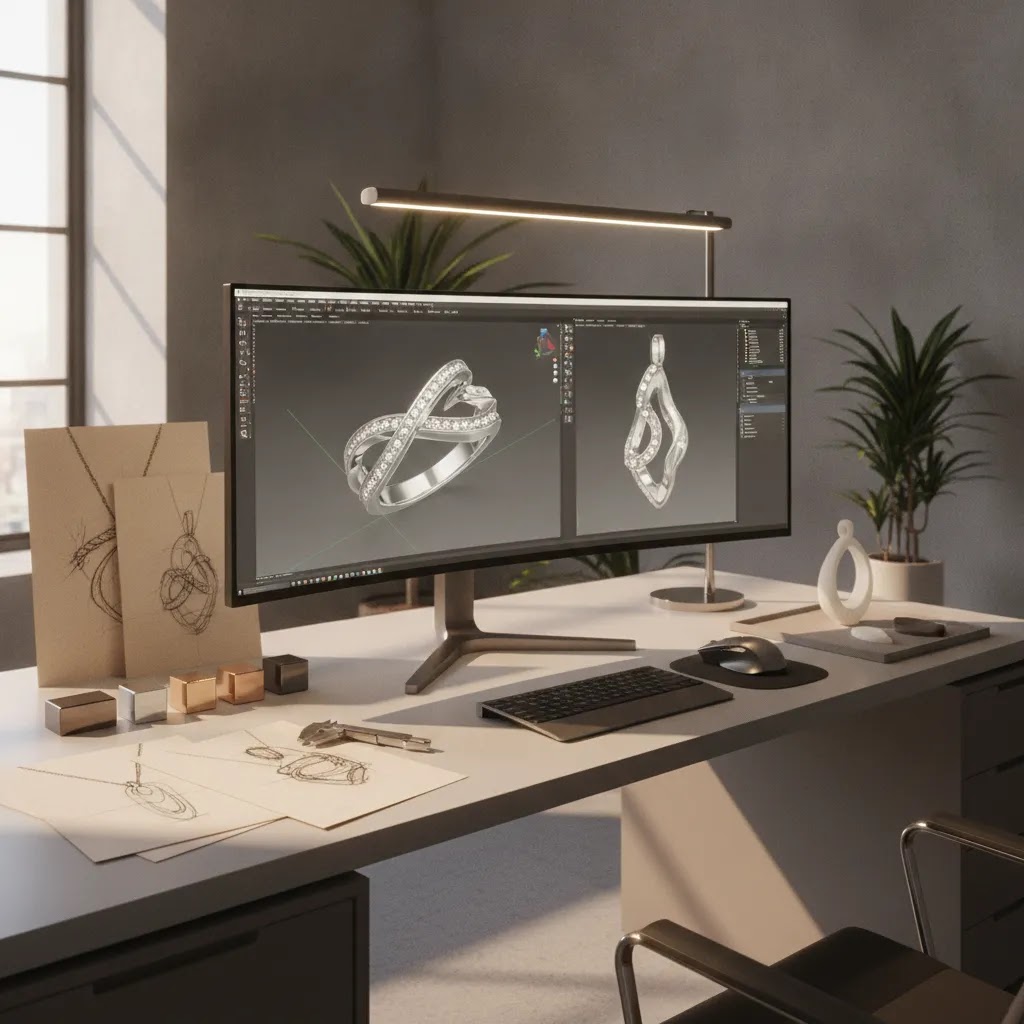
For boutique owners, private label founders, and fashion brands, digital development can help shorten revision cycles, improve communication across borders, and make sampling decisions more predictable. It also gives you a clearer way to evaluate proportion, wearability, and collection consistency before committing to production. If you are still building your understanding of the broader jewelry design space, 3D methods are one of the most practical places to focus.
This article organizes the topic into 10 specialized sub-topics so you can see how digital jewelry creation fits into real B2B workflows, from concept and modeling through approvals, sampling, packaging, and manufacturing coordination.
What 3D Jewelry Design Means in B2B Production
3d jewelry design is the digital creation of jewelry forms using specialized modeling tools that translate ideas into measurable, editable, production-oriented files. In a B2B setting, this matters because a design does not move into manufacturing based on aesthetics alone. It needs structure, scale, construction logic, and enough technical clarity for sampling and production teams to act on it.
Digital jewelry design is especially useful when several stakeholders need to approve the same concept. A founder may care about brand identity, a buyer may focus on margin potential, and a manufacturer may need to flag issues tied to assembly or casting. A strong 3D file creates a shared reference point.
Royi Sal Jewelry operates in this type of collaborative environment, helping business clients move from idea to manufacturable design through a design-and-production partnership model. That B2B context is important, because the value of 3D development is not just visual polish. It is operational clarity.
3D Jewelry Design Software and File Formats: What a Manufacturer Can Actually Use
“Which software you use” is usually less important than “what you deliver.” From a production standpoint, the goal is compatibility, editability, and clean geometry that can move through review, prototyping, and manufacturing planning without constant conversion problems.
In practice, a manufacturer or prototyping partner may ask for two categories of files: a version that can be edited, and a version that can be viewed or prototyped. Editable files are typically the native CAD project files created in the original software. These are useful when your partner needs to adjust dimensions, refine construction details, or troubleshoot geometry without rebuilding the model from scratch. View and prototype files are often exported formats, commonly mesh-based, that work well for visualization, sharing, and many prototyping workflows, but are not always ideal for detailed edits.
You want one “source” file that remains the master, plus “output” files that support rendering, review, and physical prototypes. A clear handoff package usually includes the latest approved CAD file version, a matching export for prototyping or viewing, and a set of reference renders or screenshots that show what you intended the model to look like.
Versioning matters just as much as file type. When multiple stakeholders are involved, it is easy for someone to open an older file, export the wrong model, or send the incorrect attachment into sampling. Simple discipline prevents expensive confusion: consistent file naming, dates or revision numbers, and a short revision log stating what changed and why. If there is only one process improvement you implement, make it this: every approval should reference a specific, named file version, and your team should treat that file as the only valid basis for the next step.
10 Specialized 3D Jewelry Design Topics

1. 3D jewelry modeling as the technical core
The first specialized area is model construction itself. 3d jewelry modeling covers how designers build forms, control dimensions, and prepare geometry that can move into sampling. For a business owner, this topic helps you understand why some files are easy to revise and others create delays. It also explains how digital structure affects production outcomes, not just appearance on screen.
2. Step-by-step creation for non-technical founders
Many brand builders are not CAD specialists, but they still need to understand the sequence behind development. The article on how to make 3d jewelry is useful because it breaks the process into stages you can actually manage, from concept to digital build to refinement. That perspective helps you brief a design partner more effectively and ask better questions before sampling begins.
3. Example libraries and visual references
Reference quality often shapes project quality. 3D Model Examples for Jewelry: Inspiration Gallery & Techniques explores how examples support style direction, detail planning, and visual alignment. In practice, this reduces vague feedback such as “make it more premium” and replaces it with specific visual standards your team can review together.
4. Surface direction and normals
Technical details can sound minor until they affect a sample. What is a Normal in 3D Modeling? Jewelry Designer’s Guide addresses one of those details. Surface normals influence how forms read in digital views and can expose issues in file preparation. For B2B readers, this topic matters because a visually acceptable file may still produce avoidable problems if the underlying geometry is not well managed.
5. Packaging design in CAD
Jewelry lines are rarely judged on the piece alone. 3D Jewelry Box Design: Creating Custom Packaging in CAD extends digital thinking into presentation and fulfillment. This is especially relevant if you are building a private label collection and want packaging dimensions, insert fit, and visual identity considered early instead of after production is already underway.
6. Flexible manufacturing for custom collections
Design decisions need to hold up when order volumes change. Embracing Flexibility Scalability Customized Jewelry Manufacturing Solutions looks at how customized development can support growth. For a boutique or emerging brand, this helps connect 3D planning with production scalability, which is often where creative ideas meet commercial reality.
7. Technology and personalization demand
Many businesses now build collections that require variation across names, initials, dimensions, or modular features. Personalized Jewelry Demand Harnessing Technology Empower Customization Uniqueness addresses the link between digital workflows and customization. This sub-topic is useful if your business model depends on repeatable variation without restarting the design process for every version.
8. Transparency in design-to-production communication
International sourcing relationships succeed when files, approvals, and revisions are clearly documented. Why B2B Customers Europe Prioritize Transparency Jewelry Production explores that expectation from a B2B standpoint. This matters in 3d jewelry design because digital files can either improve transparency or create confusion if version control is weak.
9. 3D printing and sampling logic
Digital models usually become valuable when they move into tangible review. Future Bling 3D Printing Jewelry focuses on how printed outputs support prototyping and pre-production decision-making. For business owners, this sub-topic clarifies why digital approval alone may not be enough for pieces with complex form, scale sensitivity, or multiple assembled parts.
10. Sampling workflow and revision discipline
Sampling is where many jewelry projects either gain momentum or lose weeks. Royi Sals 3D Sampling Workflow is relevant because it frames how a structured process can support better revisions and fewer misunderstandings. Royi Sal Jewelry approaches development as a collaborative manufacturing workflow, which is the right lens for any brand trying to turn digital files into repeatable production results.
How Brands Use Digital Design in Real Projects
A startup jewelry label may use 3d jewelry design to validate its first collection before placing a wholesale order. That could mean reviewing pendant thickness, clasp scale, or the visual relationship between matching earrings and necklaces. These checks sound small, but they can affect comfort, consistency, and production cost.
An established boutique may use digital jewelry design differently. Instead of building from scratch, the goal may be to expand a proven seller into a broader family of styles. In that case, 3D files help maintain proportions across variants and reduce the risk of launching pieces that feel disconnected from the original concept.
Fashion brands entering accessories often benefit the most from early digital discipline. Their internal teams usually move quickly, but jewelry production requires exact construction logic. Studying topics such as bespoke jewelry design manufacturing brands can help bridge the gap between creative direction and manufacturing readiness.
How to Work With a Manufacturer on 3D Files
Your 3D process becomes much stronger when you treat the file as part of a broader production package. A manufacturer usually needs more than a render. They may need dimensions, intended use notes, assembly expectations, revision comments, and a clear approval trail.
The most effective client briefs often include:
- Reference images that show the intended style direction
- Target dimensions and any non-negotiable proportions
- Notes on how pieces relate within a collection
- Expected sample review points
- A single source of truth for revisions and approvals
If you are new to development, it helps to understand the full sequence behind the jewelry manufacturing process concept creation. That context shows where 3D design sits in the larger path to finished production.
Royi Sal Jewelry presents itself as a global partner for brands that need support across design development, manufacturing coordination, and fulfillment. For many B2B clients, that integrated model may reduce friction because design conversations happen with production realities in mind from the start.
You can also explore the broader site categories for Jewelry Design and Jewelry Manufacturing to see how digital design connects with later production stages.
How 3D Design Connects to Prototyping and Production: What Changes, What Stays Locked
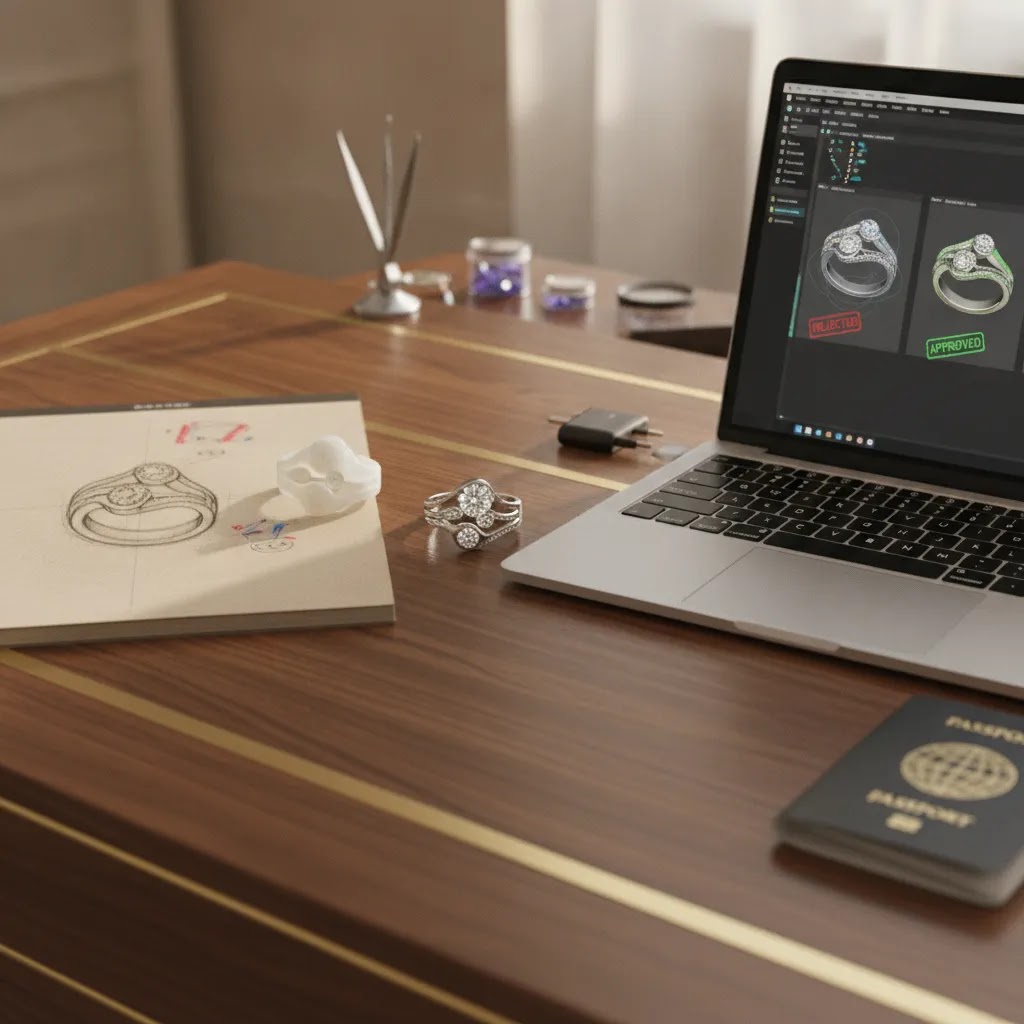
Moving from CAD approval to real-world output, it helps to think in decision gates. The digital file stage is where you approve design intent, proportions, and construction logic on screen. The prototype or sample stage is where you confirm what is difficult to judge digitally: scale perception in-hand, comfort, assembly behavior, and whether the piece still feels aligned with your brand once it exists physically.
It is normal for certain details to change between “approved CAD” and “approved sample.” That does not mean the CAD was wrong. It means the sample stage is doing its job. Brands should plan for practical adjustments that may appear once the design becomes a physical object, for example tolerance decisions for how parts meet, minor refinements to assembly logic, comfort checks on edges and contact points, and visual balance changes when the real-world scale feels different than it did on a screen.
Approval discipline protects you later, especially when you reorder or expand a style. Before sampling begins, your internal team should be aligned on what is locked and what is flexible. Lock the details that define the design identity and are hard to change without restarting work, and keep a controlled list of items that can still move during prototyping. In practice, this is easiest when one person is responsible for collecting feedback, one person is responsible for final sign-off, and every change is recorded against a dated file version so production does not drift over time.
Once a sample is approved, treat that approval as a specification reference for future production planning. That is where a true manufacturing partner adds value. The goal is not only to produce a first sample, it is to keep future runs consistent by maintaining a clear connection between the final approved file version, the final approved sample, and the documented changes made along the way.
Common 3D Jewelry Design Mistakes
The most common mistake is approving a design because it looks attractive in a render without asking whether it is practical to sample. Good digital jewelry design is not only about appearance. It also needs to account for wearability, assembly, consistency, and the realities of production.
A second issue is weak revision control. Many businesses send feedback through scattered messages, screenshots, and verbal calls. That often creates duplicate versions and avoidable misunderstanding. One organized review document can save substantial time.
A third problem is treating 3D as a final answer instead of a decision tool. A file may look complete and still require testing through prototyping, especially for pieces with moving parts or unusual structure. Businesses that respect this step usually manage expectations better.
Another mistake is separating packaging too late from the jewelry development process. If your brand experience depends on presentation, early planning around digital packaging concepts can support smoother launch preparation.
Security and Design Control for Digital Files (Sharing, Access, and Feedback)
Design protection starts with practical file control. 3D files are easy to duplicate, rename, and forward, especially when teams are working quickly across time zones. A single uncontrolled attachment can become five versions within a week, and then no one is fully certain which one was approved.
A simple control approach is often enough. Keep controlled sharing to only the stakeholders who need the file, use access permissions where possible, and avoid sending editable source files broadly if a view-only export would support the same conversation. This is not about distrust. It is about reducing confusion and preventing accidental distribution of your working assets.
Feedback control matters too. The strongest workflow is one source of truth for comments tied to a dated file version. Some teams use annotated screenshots, some use shared documents, and some use online viewers that allow markups. The tool is less important than the discipline: consolidate comments, confirm which revision is being discussed, and close the loop by documenting what was accepted, what was rejected, and what changed in the next file.
If you are working cross-border, include data handling in your due diligence. Ask your partner who will receive the files internally, how updates are distributed to production teams, how long files are retained, and how older versions are archived to avoid accidental reuse. You are not asking for guarantees. You are confirming that there is a professional workflow that respects design control and prevents “wrong file” production errors that can affect sampling and future reorders.
Frequently Asked Questions

What is 3d jewelry design in a business manufacturing context?
In a B2B setting, 3d jewelry design is the digital development of jewelry concepts into structured files that can support review, revision, sampling, and production planning. It helps brands move beyond sketches by giving designers and manufacturers a shared technical reference. This is useful for private label programs, capsule collections, and wholesale assortments because it creates clearer communication around size, proportion, and construction before production commitments are made.
How is 3d jewelry design different from a hand sketch?
A hand sketch is useful for concept direction, but it usually cannot carry the full technical burden of manufacturing. A 3D file can show measurable dimensions, more precise forms, and a clearer basis for approvals. For business owners, this often means fewer assumptions between the design side and the factory side. Sketches may start the conversation, while digital files help move it toward sampling and organized production review.
Do I need CAD knowledge to launch a digitally designed jewelry line?
No, but you do need enough process knowledge to manage the project well. Many founders and buyers are not CAD specialists. What matters is your ability to communicate your concept, define priorities, review files carefully, and keep feedback organized. Understanding digital workflows can still improve your results because you will know what to ask for, when to request revisions, and how to evaluate a design before approving the next production stage.
What should I send a manufacturer before 3D development begins?
Most projects benefit from a clear brief that includes reference images, target product categories, intended dimensions, collection context, and notes on your brand direction. If you already have sketches or previous samples, include those as well. The goal is to reduce ambiguity early. Manufacturers and design partners can usually work more efficiently when they know which details are fixed, which are flexible, and what your commercial objectives look like for the collection.
Can 3d jewelry design help reduce sampling mistakes?
It often can, because digital review helps identify obvious issues before physical sampling starts. You may catch proportion problems, mismatched components, or collection inconsistencies during the file stage. That said, digital approval does not remove the need for real sampling in many cases. Physical review is still important for testing scale, appearance, and overall feel. The strongest process uses 3D design to improve sample quality, not replace thoughtful sample evaluation.
How do brands protect design intent when working with overseas partners?
Protection starts with documentation and process discipline. Use a structured design brief, controlled file sharing, dated revision records, and written approvals tied to named file versions. Avoid casual feedback spread across multiple channels. Many B2B problems come from inconsistency rather than bad intent. Clear documentation also makes it easier to compare approved digital designs against later samples. Businesses that manage design data carefully are usually in a stronger position during production discussions.
Is 3d jewelry design useful for small collections, or only large brands?
It can be useful at both levels. Smaller brands often gain clarity and confidence from digital development because they have less room for trial-and-error costs. Larger brands may use it to manage consistency across broader assortments, seasonal launches, or multiple stakeholders. The value depends less on company size and more on the complexity of the collection, the need for approvals, and the importance of avoiding rework before manufacturing begins.
What role does 3D printing play in jewelry development?
3D printing often supports prototyping and sample review by turning digital models into physical forms for evaluation. This can help your team assess scale, shape, and design logic before full production moves ahead. It is particularly helpful when a piece has unusual geometry or when a buyer wants more confidence before approving a line. Printed outputs are most effective when treated as part of a larger review process rather than as proof that every production detail is already resolved.
How should I review a 3D jewelry file before approval?
Review the file against brand goals and production logic at the same time. Check dimensions, symmetry, collection consistency, and whether the design still reflects your original concept. Ask whether any details seem visually strong but operationally unclear. If several team members are involved, consolidate feedback into one version-controlled document. That discipline is often more valuable than the review meeting itself because it prevents confusion during revisions and sampling.
What is the best next step after a 3D design is approved?
The next step is usually a structured sample or prototype phase tied to the approved file version. Your team should confirm what will be evaluated in that sample, who signs off, and how changes will be documented if revisions are needed. This keeps the project moving without blurring the line between approved design intent and later adjustments. If you are exploring a manufacturing partnership, this is also a sensible point to discuss production planning in more detail.
What is the best 3D software for jewelry design?
The best software is typically the one that fits your workflow and results in files your manufacturing partner can actually use. For B2B projects, your priority is not the tool name. Your priority is deliverable quality: clean, editable geometry, clear dimensions, and exports that support review and prototyping. If you are working with a manufacturer, ask what file formats they prefer, how they handle revisions, and whether they need editable source files or only specific exports for sampling.
Can you make 3D printed jewelry?
3D printing is commonly used to produce prototypes and pre-production samples from a digital jewelry design. In some workflows, printed parts may be used as a step within manufacturing, but the exact role depends on the production method, design, and partner capabilities. The practical question is how your digital file will be used: will it be printed for fit and scale review, printed for assembly testing, or used only as a reference before other production steps begin.
What is the salary of a 3D jewelry designer?
Compensation varies widely based on location, experience level, and whether the designer is employed in-house, working freelance, or operating as part of a design and manufacturing partner team. For a jewelry business, it is often more useful to budget around project scope rather than salary comparisons, for example how many models you need, how complex the pieces are, how many revision rounds you expect, and whether the designer is responsible for production-ready deliverables or only conceptual modeling.
What 3D printers do jewelers use?
Jewelers and prototyping partners use a range of 3D printers depending on the type of prototype needed, required detail, and how the printed output will be evaluated. Rather than starting with a printer model, start with your decision objective: are you validating scale, checking assembly behavior, reviewing comfort, or testing how details read at real size. Your manufacturing partner can usually advise on what type of printed prototype is appropriate for your design and what file exports they need to produce it.
Key Takeaways
- 3d jewelry design supports clearer communication between brand teams, designers, and manufacturers.
- Digital files are most valuable when paired with organized briefs, revision control, and sample review.
- The topic includes specialized areas such as modeling, packaging CAD, surface geometry, printing, and workflow transparency.
- B2B brands benefit most when 3D development is treated as a production planning tool, not only a visual step.
- A collaborative manufacturing partner may help align creative intent with real production requirements earlier in the process.
Conclusion
3d jewelry design gives jewelry businesses a more precise way to turn ideas into manufacturable products. It improves how you brief a partner, review details, manage revisions, and prepare for sampling. For a growing brand, that can mean better internal alignment and fewer avoidable misunderstandings once production planning begins.
The 10 sub-topics in this article show that digital jewelry creation is not one isolated skill. It touches modeling, approvals, packaging, customization, file quality, sampling, and manufacturing communication. If you are building a new collection or refining an existing line, start by identifying which of those areas creates the most friction in your current process.
To explore how a custom manufacturing partnership works, visit royisal.com. If you want to discuss your collection requirements in more detail, you can also reach out to Royi Sal Jewelry to start a design conversation grounded in real production needs.