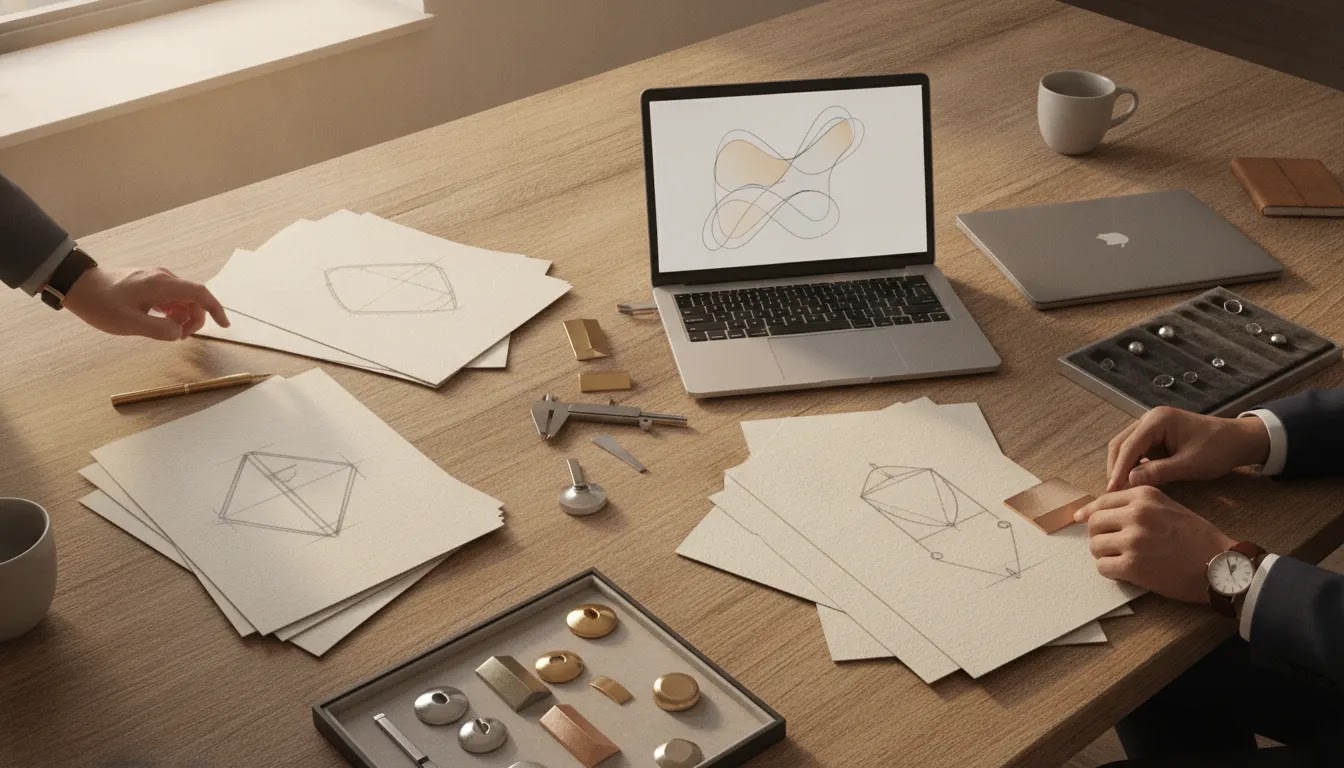
Early conversations can sound promising, yet the relationship may still lead to missed launch dates, uneven production runs, or samples that drift from your brief. For that reason, treat supplier selection as a business decision, not just a sourcing task.
If you are building a private label line, expanding a boutique assortment, or moving from small-batch testing into repeatable production, you need criteria that go beyond polished photos and friendly replies. This guide covers that decision point. It shows how to assess design collaboration, production discipline, communication quality, and long-term growth fit. If you are still comparing the broader field of custom jewelry manufacturers, this guide will help you narrow the list with more confidence.
The 3 Things That Matter Most in a Custom Jewelry Supplier
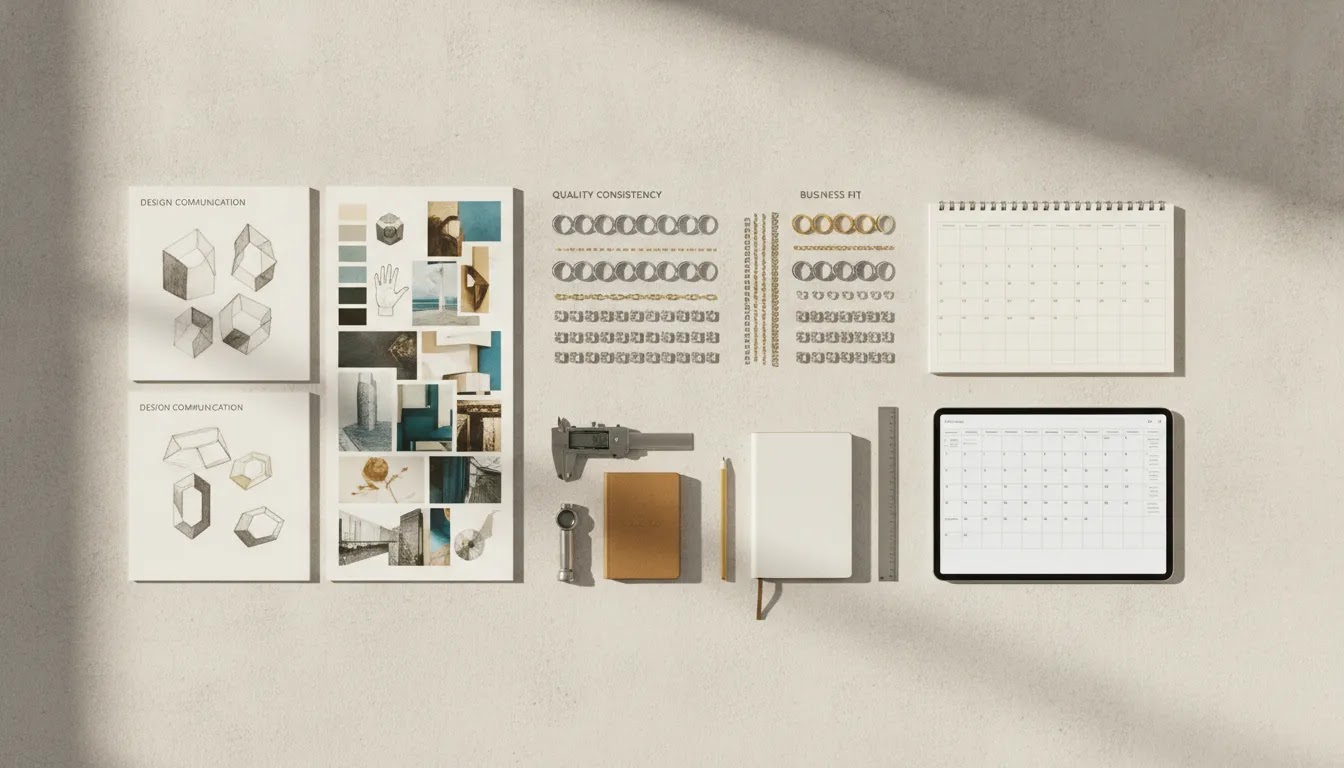
Clear design-to-production communication: your supplier should translate your brief into samples and then into repeatable production without constant reinterpretation.
Quality consistency at scale: one good sample is not enough if later production runs may vary.
Business fit: the right partner should match your order volume, revision needs, launch schedule, and long-term growth plans.
What This Custom Jewelry Supplier Guide Covers
This article explains how business buyers can evaluate a custom jewelry supplier before they commit to sampling or production. The focus is practical. You will learn what to ask, what to verify, what warning signs to watch for, and what supplier structure may fit a growing jewelry brand.
It also addresses a common gap in the buying process. Many founders know they want custom jewelry design and manufacturing support. However, they do not always know how to separate a workable partner from a risky one.
What a Custom Jewelry Supplier Actually Does
Confusion often starts with the word supplier. In some cases, a jewelry supplier simply sells existing products that buyers can reorder with minor changes or no changes at all. A custom jewelry supplier does much more. The team usually interprets your concept, guides development, manages samples, coordinates production, and works to keep results consistent from one order cycle to the next.
That distinction matters because custom work involves more than placing an order. You need to turn a design direction into something your business can approve, reorder, and build into a private label assortment. If a supplier only processes orders, your team may still have to solve design gaps, revision issues, and production questions on its own. By contrast, a true manufacturing partner adds structure and reduces the gap between concept and execution.
For brands building exclusive collections, repeatability matters as much as creativity. A partner who connects development with production can often support more consistent results over time. Royi Sal Jewelry follows that broader model through custom jewelry design and development, collaborative consultation, manufacturing, and fulfillment support. As a result, the company offers more than a standard supply arrangement built only around transaction volume.
For broader manufacturing definitions and industry terminology, the Gemological Institute of America (GIA) offers widely recognized educational resources. In addition, the Jewelers Vigilance Committee provides guidance on jewelry industry standards and compliance topics.
Who Should Buy Custom Jewelry Supplier Services
This path usually suits brands that want differentiated product rather than open-market inventory. That group may include boutique owners building store-exclusive collections, fashion labels adding jewelry to an existing brand, and entrepreneurs developing private label assortments with a clear point of view.
It can also fit established businesses that have outgrown inconsistent small workshops and now need a more structured development process, sampling workflow, and fulfillment support.
However, this path may not fit every business. If you need immediate stock, have not defined your product direction, or cannot manage sampling, revisions, and production planning, choose a simpler sourcing model first. Custom work usually rewards clarity and patience. If your business still needs to validate demand at a very basic level, a stock-based approach may be more practical before you commit to a custom supplier relationship.
What to Prepare Before Contacting a Custom Jewelry Supplier
Supplier research matters, but your preparation often matters first. The more clearly you define your brand direction and product goals, the more useful a supplier conversation becomes. If you reach out before your assortment, positioning, or launch intent is clear, you may get vague quotes, mismatched assumptions, or samples that do not solve the real business problem.
Start with the basics. Gather design references, define the type of assortment you want to build, outline your estimated order plans, note your expected launch timing, and decide how much revision flexibility your team can manage. It also helps to mark which details are fixed and which are still open to development input. A supplier can guide refinement, but that process works best when your business priorities are already visible.
Better preparation improves three things at once: quoting accuracy, sample relevance, and communication efficiency. If your brief is incomplete, a supplier may still respond, but the early conversation will likely stay general. When you document references and expectations from the start, you can judge more easily whether the supplier understands your collection plan and whether the project scope fits both sides.
Key Factors to Evaluate Before You Choose a Custom Jewelry Supplier
| Evaluation area | What the article says to assess | Why it matters |
|---|---|---|
| Design capability | Brief interpretation, useful questions, and early feasibility feedback | Helps prevent expensive mistakes before production |
| Sampling process | Revision tracking, approval checkpoints, and documented accountability | Shows whether the supplier can move from concept to production clearly |
| Quality control | Consistency across production runs and repeat orders | Supports reorders, wholesale accounts, and line expansion |
| Communication | Specific replies, scope clarification, and realistic timeline discussions | Reduces confusion, especially in cross-border projects |
| Growth fit | Alignment with your current stage and likely next stage | Prevents mismatch between your brand and the supplier model |
| Fulfillment support | Shipping preparation and post-production communication | Keeps handoff organized after manufacturing ends |
1. Custom Jewelry Supplier Design Capability and Brief Interpretation
A custom supplier should do more than accept files and send a quote. Look for proof that the team can interpret a design brief, ask useful questions, and flag feasibility issues before they become expensive mistakes. In many projects, the early consultation stage matters as much as production itself.
Royi Sal Jewelry emphasizes partnership over transactional manufacturing. Brands that need more than basic production often value that consultative approach. This structure can help companies that are developing new collections or shaping their aesthetic identity because it encourages shared problem-solving from concept through completion.
Avoid suppliers who answer every concept with a quick yes but give little detail about how the design will move into production. If your project relies on digital development, this guide to 3D jewelry design can help you understand the process better.
2. Custom Jewelry Supplier Sampling Discipline and Revision Process
The sampling phase shows whether you can trust a supplier to deliver. Ask about the revision process, how the team tracks feedback, and which checkpoints they must clear before manufacturing begins. A reliable partner should explain a clear path from concept to sample development and then into full production.
Look for a process that allows refinement without becoming vague or endless. If you want to improve your own briefing quality before that stage, this article on design tips for strengthening your jewelry brand with an oem partner can help you communicate more effectively.
Avoid suppliers who cannot explain how they track, approve, and confirm changes before bulk production begins.
3. Custom Jewelry Supplier Quality Control and Repeatability
A reliable sample does not automatically mean reliable repeat orders. Ask how the supplier maintains consistency across production runs, especially if you plan to reorder, expand collections, or serve multiple wholesale accounts.
Look for signs of production discipline: structured approvals, consistent communication, and an understanding that wholesale and private label clients need repeatability, not just one-off craftsmanship.
Avoid choosing a partner based only on visual sample appeal. A supplier relationship needs operational consistency as much as creative capability.
4. Custom Jewelry Supplier Communication Reliability Across Borders
Many jewelry brands work with overseas or globally oriented suppliers. As a result, communication quality often becomes one of the best predictors of project success. Royi Sal Jewelry presents itself as a global B2B partner, so communication style, responsiveness, and collaboration sit at the center of its service model.
Look for replies that are specific, organized, and commercially aware. Good communication usually includes scope clarification, expectation setting, and realistic discussion of timelines or revisions. Businesses evaluating a B2B partner for your jewelry vision and market should watch these early conversations closely.
Avoid suppliers whose communication turns unclear once technical or production questions begin. Early confusion often grows when orders become more complex.
5. Custom Jewelry Supplier Order Flexibility and Growth Fit
Not every supplier fits the same business stage. Some work best for established brands with predictable reorder patterns. Others are more open to collaborative development for emerging labels. Ask whether the supplier seems comfortable supporting your current stage and your likely next stage.
Look for a partner that can support development now and broader manufacturing later, depending on your project scope. Royi Sal Jewelry positions itself around custom design, wholesale manufacturing, and private label support, which suggests that broader partnership model.
Avoid forcing a mismatch. A supplier that fits a large-volume buyer may not fit a younger brand that is still shaping its assortment.
6. Custom Jewelry Supplier Fulfillment and Logistics Support
Production is only one part of the equation. If your business sells internationally, serves retail accounts, or coordinates multi-market deliveries, ask what logistics support exists after manufacturing. Royi Sal Jewelry specifically references global shipping and order fulfillment as part of its service offering.
Look for clarity around what happens after production is complete, including how the team prepares orders for shipment and how communication continues during fulfillment.
Avoid treating logistics as an afterthought. A strong product can still create business friction if the post-production handoff feels disorganized.
7. Custom Jewelry Supplier Partnership Approach, Not Just Vendor Response
The best supplier relationships often feel like structured collaborations. That does not mean informality. It means your supplier understands your commercial goals, product direction, and need for clear decisions at each stage.
Royi Sal Jewelry benefits from leadership by Royi Gal, who works across design aesthetics and manufacturing execution. That combined expertise can help bridge the common gap between creative vision and practical production. Clients who work with a leader who understands both sides often face fewer complications during development.
Avoid suppliers who treat every question as a stand-alone transaction instead of part of a longer-term production partnership.
Questions to Ask on the First Custom Jewelry Supplier Call
The first call should show you how the supplier works in practice, not just whether they want the project. Ask who owns each stage after you submit your brief. That includes development review, sampling coordination, revision tracking, production planning, and post-approval handoff.
You should also ask how the sample approval flow works from start to finish. For example, ask how the team documents feedback, how many revision rounds they can usually manage, and what they must approve before bulk production begins. These questions show whether the supplier uses a real system or relies on informal back-and-forth that can create confusion later.
Capacity fit is another issue worth raising early. You do not need exact production promises on a first call. However, you do need a realistic sense of whether your order size, assortment structure, and business stage match the supplier’s normal workflow. It also helps to ask how often they share updates during development and production, and how they handle issues if something shifts after work begins. A strong first call should leave you with more clarity about process, communication, and accountability.
Custom Jewelry Supplier Price Ranges and What You Get at Each
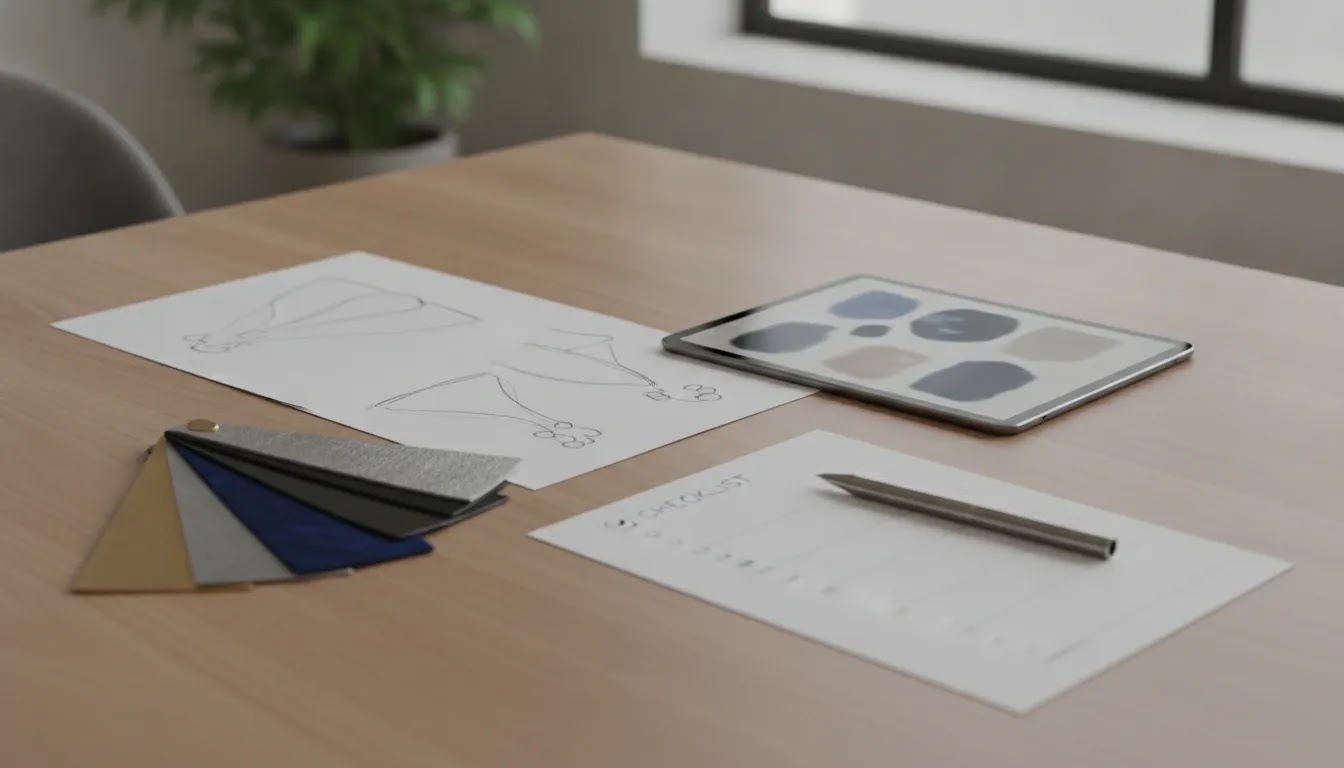
Exact pricing varies widely by project, and no fixed price list is publicly confirmed here. Still, buyers usually benefit from thinking in 3 pricing tiers rather than hunting for a single standard rate. For custom jewelry supplier services, price often reflects development complexity, revision needs, production structure, and service depth.
Budget
This tier may suit very simple projects, limited development support, or suppliers who expect highly production-ready briefs. You may get lower upfront costs, but communication depth, revision flexibility, and production guidance may be more limited. This level can work for experienced buyers who already know how to manage development tightly.
Mid-range
This is often where growing brands look for the best balance between collaboration and cost control. You may get better communication, a more structured design process, and stronger support through sample development and production planning. Many private label founders begin their serious supplier search here.
Premium
This tier may include more consultative design input, stronger project management, and a broader end-to-end service model. It may fit brands launching higher-stakes collections, coordinating multiple SKUs, or building a supplier relationship meant to support scaling over time. The key question is simple: does the added service reduce risk and improve execution for your business?
Common Mistakes to Avoid
- Choosing a supplier based mainly on photos or social proof, without testing communication and process depth.
- Assuming a strong sample guarantees smooth full production.
- Sending a vague design brief and expecting accurate interpretation.
- Underestimating how many revisions a custom project may require.
- Ignoring post-production logistics until the order is finished.
- Selecting a supplier that does not match your current business scale or reorder plans.
Where Royi Sal Jewelry Fits in This Custom Jewelry Supplier Evaluation
If you want a manufacturing partner that engages with your vision instead of simply executing orders, Royi Sal Jewelry is worth considering. The company focuses on B2B custom jewelry design and manufacturing for wholesale and private label businesses. Its services include collaborative design consultation, bespoke jewelry creation, and international logistics support.
This approach can work well for entrepreneurs who want to turn a raw concept into a fully specified line. It can also suit established buyers who want a manufacturing collaborator involved at each stage. Royi Sal Jewelry’s founder brings experience in both design and production, which helps clients balance creative goals with feasibility, optimization, and scalable manufacturing.
When you compare manufacturing partners, review Royi Sal Jewelry’s resources on production methods and business strategy at royisal.com. This research can help you prepare for a more meaningful supplier conversation, especially when your project requires close detail control or includes time-sensitive elements. If you are exploring sourcing locations, this article on Thailand as a destination to elevate your jewelry business adds useful context.
Custom Jewelry Supplier Buying Checklist
- Confirm the supplier can support custom design, not just manufacturing execution.
- Ask how sample feedback and revisions are documented.
- Check whether communication is detailed, timely, and commercially clear.
- Verify how production consistency is managed from sample approval onward.
- Assess whether the supplier fits your current order volume and likely growth path.
- Ask what shipping or fulfillment support is available after production.
- Make sure your internal brief includes dimensions, references, priorities, and non-negotiables.
- Clarify expectations before approving a production run.
Strengths and Considerations
Strengths
- Custom supplier relationships may give your brand stronger product differentiation than stock sourcing models.
- A collaborative design process can help turn early concepts into more production-ready collections.
- Working with one partner across development and manufacturing may reduce handoff friction.
- Structured supplier relationships often make reorders and line expansion more manageable over time.
- Global fulfillment support can help brands that operate across markets or channels.
Considerations
- Custom development usually takes more time than buying ready-made inventory.
- Sampling rounds may add complexity, especially if the original brief is incomplete.
- Minimum order expectations, timelines, and revision scope may vary significantly by supplier and project.
- Cross-border communication can still create misunderstandings if specifications are not documented clearly.
Frequently Asked Questions
What is the difference between a custom jewelry supplier and a standard jewelry supplier?
A standard supplier often sells existing inventory or pre-developed styles. A custom jewelry supplier usually helps develop pieces to your specifications and then produces them for wholesale or private label use. That relationship often requires more consultation, approvals, and planning. In return, your brand may gain more control over product differentiation.
How do I know if my business is ready for a custom jewelry supplier?
You may be ready if you have a clear brand direction, a defined target assortment, and the ability to manage sampling and production planning. Businesses that are still testing whether they want to sell jewelry at all may want to validate demand first. Custom development tends to work best when product direction is already more defined.
Should I prioritize design help or manufacturing capacity?
Most growing brands need both, but the right balance depends on your stage. If your concepts are still evolving, design collaboration may matter more early on. If your collection is already well defined and you need repeatable output, manufacturing discipline may become the priority. In many cases, a supplier that understands both sides creates fewer downstream problems.
Is overseas sourcing always riskier for custom jewelry projects?
Not always, but it usually requires stronger communication habits and more disciplined approvals. Risk comes less from geography alone and more from unclear specifications, weak follow-up, or unrealistic assumptions on both sides. A globally oriented supplier that communicates clearly may be a better fit than a closer supplier with weak process control.
How many samples should I expect before production?
That depends on your design complexity, the clarity of your initial brief, and the number of revisions needed. Some projects move quickly, while others need multiple review rounds before approval. Buyers should plan for refinement rather than assume the first sample will be final. Clear communication often reduces unnecessary cycles.
What should be included in a supplier evaluation call?
Your call should cover design support, sample handling, revision expectations, communication flow, production planning, and shipping support. It also helps to ask how the supplier works with brands at your stage. The goal is not only to get answers, but also to see whether the team responds with clarity, realism, and commercial understanding.
Can a custom jewelry supplier help a small brand scale?
Yes, potentially, if the supplier’s service model fits your business stage and can continue supporting you as order volumes grow. A good partner may help create more consistency across development and reorders. However, scaling still depends on your forecasting, assortment decisions, and internal operations, not only on supplier capability.
What are the most common warning signs during supplier selection?
Watch for vague answers, overconfident promises, inconsistent communication, or a lack of detail around revisions and production approvals. Another warning sign appears when a supplier seems eager to start but cannot explain how the project will be managed. Strong suppliers usually set expectations carefully instead of promising perfect outcomes too quickly.
Why does founder expertise matter in a jewelry manufacturing partner?
Founder expertise shapes how a company connects creative vision with practical execution. Royi Sal Jewelry benefits from Royi Gal’s experience in both design and manufacturing. For clients, that means guidance that respects aesthetic goals while staying grounded in production reality. As a result, creative concepts are more likely to translate into finished pieces successfully.
How can I create my own jewelry brand?
Most brands start by defining a clear product direction, target customer profile, and assortment plan before they approach manufacturing. After that, the work usually moves into design references, development briefs, sampling, revisions, and production planning. If you want to build a private label jewelry brand, choose a supplier that can support both production and the move from concept to a repeatable collection structure.
How much does it cost to make custom jewelry?
There is no single standard cost because custom jewelry pricing depends on project scope, design complexity, revision needs, order quantity, and the level of development support required. Some projects are straightforward, while others involve more sampling and coordination before production approval. For business buyers, the better question is often what level of process support and repeatability the quote includes, not only the unit cost.
What is the difference between OEM and ODM in jewelry manufacturing?
With OEM manufacturing, you direct production from your own design vision and brand requirements. By contrast, ODM uses the manufacturer’s existing design library or development infrastructure and then adapts it to your brand. For private label founders, this difference matters because it affects originality, development responsibility, and the amount of creative control you keep.
What should I ask before choosing a custom jewelry manufacturer?
Ask how the team handles design interpretation, sampling, revisions, production approvals, communication during manufacturing, and post-production fulfillment. You should also ask whether your order size and business stage fit the supplier’s workflow. Good answers are specific and process-based, which makes it easier to judge whether the relationship will hold up once production begins.
Key Takeaways
- The best custom jewelry supplier for your business is not always the cheapest or fastest, but the one that fits your process, communication needs, and growth stage.
- Design interpretation, sampling discipline, and production repeatability usually matter more than presentation alone.
- Global shipping and fulfillment support can become a meaningful advantage for brands selling across channels or markets.
- Royi Sal Jewelry is positioned as a collaborative B2B partner for custom design, manufacturing, private label development, and fulfillment support.
- A careful supplier selection process may reduce costly revisions, launch delays, and reorder inconsistency later.
Conclusion
Selecting the right manufacturing partner requires an operational view, not a simple procurement mindset. Your supplier influences product performance, output consistency, and your ability to scale. In practice, a strong partner becomes an extension of your brand’s capabilities. That influence reaches from design refinement to production efficiency and timeline control.
When you evaluate options, focus on collaboration, process transparency, and long-term fit. Royi Sal Jewelry specializes in B2B custom jewelry production with a strong emphasis on design partnership and durable manufacturing relationships. If that approach matches your collection vision, visit royisal.com or contact the team with details about your jewelry project.