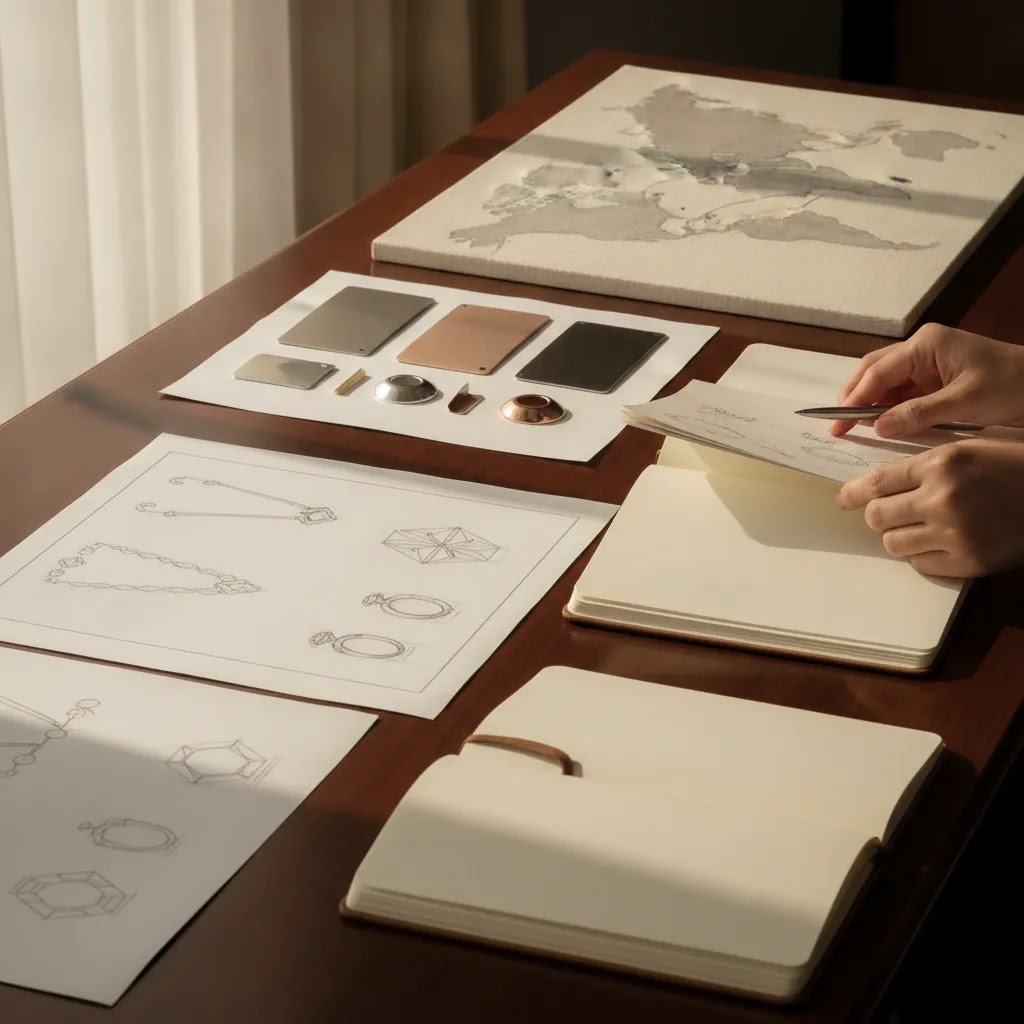
If you are rethinking a China-based setup, ask a practical question. Can Thailand improve your next stage of growth? That may involve better sampling control, stronger communication, more consistent production, or a more collaborative custom process. If you need broader context first, review thailand jewelry sourcing alongside this article.
What continuous growth from China to Thailand means for a jewelry business
Moving production from China to Thailand is not simply a country swap. In practice, it becomes a business model review. You need to decide whether your current supplier structure still fits your brand’s needs for design collaboration, production visibility, reorder planning, and growth capacity.
Many jewelry founders start in China because it offers scale and broad manufacturing access. That can work well, especially for straightforward programs. However, problems often appear later. A brand may need better control over revisions, more reliable communication, or a smoother path from concept to repeat production.
For a growing jewelry business, the move to Thailand may support a more disciplined operating rhythm. That can include stronger sampling oversight, a clearer approval chain, and a more collaborative custom development environment. Royi Sal Jewelry’s service model centers on custom jewelry design and development, jewelry manufacturing for wholesale and private label clients, collaborative design consultation, and global shipping and order fulfillment. That kind of end-to-end structure matters if your goal is not just changing factories, but building a more dependable growth base.
How continuous business growth by manufacturing from China to Thailand can happen
Growth becomes continuous when production supports repeatable business decisions. If your supply chain creates rework, launch delays, or inconsistent samples, your sales effort may keep resetting. By contrast, a better manufacturing setup helps your team make progress that compounds over time.
1. Better launch discipline
A more collaborative factory relationship may improve how designs move from brief to sample to production run. As a result, assortment planning becomes easier and product launch calendars become more realistic.
2. Cleaner reorder economics
Continuous growth often depends on reorders more than first launches. If Thailand manufacturing gives you more confidence in repeat quality, approved specifications, and fulfillment coordination, your proven SKUs may become easier to replenish without constant troubleshooting.
3. Lower management drag
A supplier that communicates clearly can reduce the internal time your team spends chasing answers, clarifying revisions, or correcting assumptions. That does not always show up in a quote. However, it often affects profitability and decision speed.
4. Stronger custom development capacity
Brands that want distinct collections usually need a structured design-to-production workflow. If your growth plan relies on private label development rather than generic sourcing, your manufacturing partner’s ability to support jewelry design becomes a strategic factor, not a side issue.
Continuous business growth by manufacturing from China to Thailand: transition roadmap

Manage a manufacturing shift like a controlled rollout, not a full switch. Most brands avoid disruption by using a phased sequence that keeps proven SKUs selling while they test the new supply line.
Start with a phased rollout
A typical transition sequence starts with a SKU audit. You identify what is driving revenue and what is creating operational noise. Next, you clean up documentation so a new partner can build accurately. That may include consolidating measurements, aligning naming conventions, and confirming what is truly non-negotiable versus what can vary within tolerance.
After that, brands usually plan sampling with intention. Then they place a pilot PO. Finally, they ramp volume in phases once they confirm repeatability.
Choose the right test SKUs
Choosing test SKUs is a strategic decision. Brands often start with stable repeat sellers that have clear historical performance and medium complexity. Avoid your most fragile designs. Also avoid your most experimental development projects. Your goal is to learn how the new partner reads your specs and executes repeat production under normal conditions.
Define success before you sample
Define success criteria before you begin. For example, decide whether the sample matches the brief closely enough for approval without endless rounds. Also decide how many revision cycles you will allow and whether the factory follows through cleanly after approval.
You can also track operational signals. Look at whether questions stay specific, whether the factory flags risk early, and whether the team confirms changes in writing before production starts.
Prepare documents before outreach
Preparation work before contacting any new factory often determines how fast you can move. Have spec sheets and measurements ready, along with reference samples if you have them. Include packaging requirements if packaging is part of your program, and assign one clear approval owner on your side.
If multiple people approve and no one consolidates feedback, overseas production often slows down. As a result, revision rounds multiply. One accountable decision-maker keeps the new relationship structured. If your team uses digital prototyping, it may also help to review 3D jewelry design workflows before launch.
Key operating components to evaluate
A country move only helps if the operating pieces behind it are stronger. Focus on the mechanics that affect day-to-day execution.
- Development workflow: How clearly your supplier handles briefs, revisions, approvals, and production handoff.
- Communication quality: Whether the supplier answers questions precisely and flags risks early.
- Production consistency: Whether the supplier can reproduce approved samples with acceptable stability.
- Order flexibility: Whether the supplier structure fits your current and near-future volume needs.
- Fulfillment readiness: Whether shipping coordination and international support are manageable for your business.
If your current China arrangement is highly price-led but weak in process support, that gap can hold back growth. It may be useful to compare your current model against adjacent sourcing paths such as a china brass jewelry manufacturer setup if your assortment includes lower-complexity or price-sensitive programs. The point is not that one route is always superior. The point is fit.
Royi Sal Jewelry presents itself as a global B2B partner led by Royi Gal, a jewelry designer and manufacturer. That dual perspective is relevant here because growth planning is rarely just a factory issue. It is also a design translation issue, an approval issue, and a communication issue.
Continuous business growth by manufacturing from China to Thailand: landed cost and risk
If you are using a Thailand move to protect margins, build the decision on landed-cost reality, not just a unit quote. Jewelry businesses that plan well treat manufacturing as one part of a broader cost and risk model, especially during a country shift.
Build a landed-cost model
A practical landed-cost checklist usually includes duties, freight, payment terms, and any tooling or setup costs that may apply depending on the project. It also includes indirect costs such as sampling rounds, revision time, and rework risk if specifications are not followed.
Internal management time belongs in the model as well. If your team spends weeks clarifying issues that a clean development workflow should have resolved, that labor is part of the true cost of the supplier relationship. For broader policy context, you can review the U.S. Commercial Service Thailand market overview.
Compare scenarios, not assumptions
Tariff exposure can be one variable in the comparison, but it is not the only one. Brands often assume one country is automatically cheaper. Then they discover that freight timing, payment structure, or extra sampling rounds change the economics.
The clean way to compare is to build scenarios. Use the same SKU, the same expected packaging and fulfillment requirements, and the same quality expectations. Then review how the total picture changes under different assumptions. You may also want to compare this with broader guidance on tariffs on jewelry.
Control documentation and change management
Risk control is where many country moves succeed or fail. Documentation discipline is one of the most reliable controls you have. If your specs are clear, versioned, and used on every reorder, you reduce the chance that details drift over time.
Change management matters just as much. If your team approves a design change informally and does not update the master documentation, the next reorder can quietly revert to an earlier version. That type of spec drift can be expensive because it creates inconsistent product in the market and forces your team into reactive quality decisions.
If you want continuous business growth by manufacturing from China to Thailand, do more than move production. Move your operating system into a structure that is easier to repeat, easier to audit, and easier to scale without surprises. For export and customs reference, see the Thai Customs Department.
Quick comparison summary
| Factor | China may fit when | Thailand may fit when |
|---|---|---|
| Supplier status | You already have a reliable supplier. | You are evaluating a new partner relationship. |
| Product profile | Your products are stable. | Your brand needs more custom work. |
| Operational focus | Your team has strong internal control over specifications and quality checks. | Your brand needs closer collaboration and more controlled development. |
| Growth need | Cost pressure is the main issue. | You are scaling collections, not just placing isolated orders. |
China vs. Thailand for growth planning
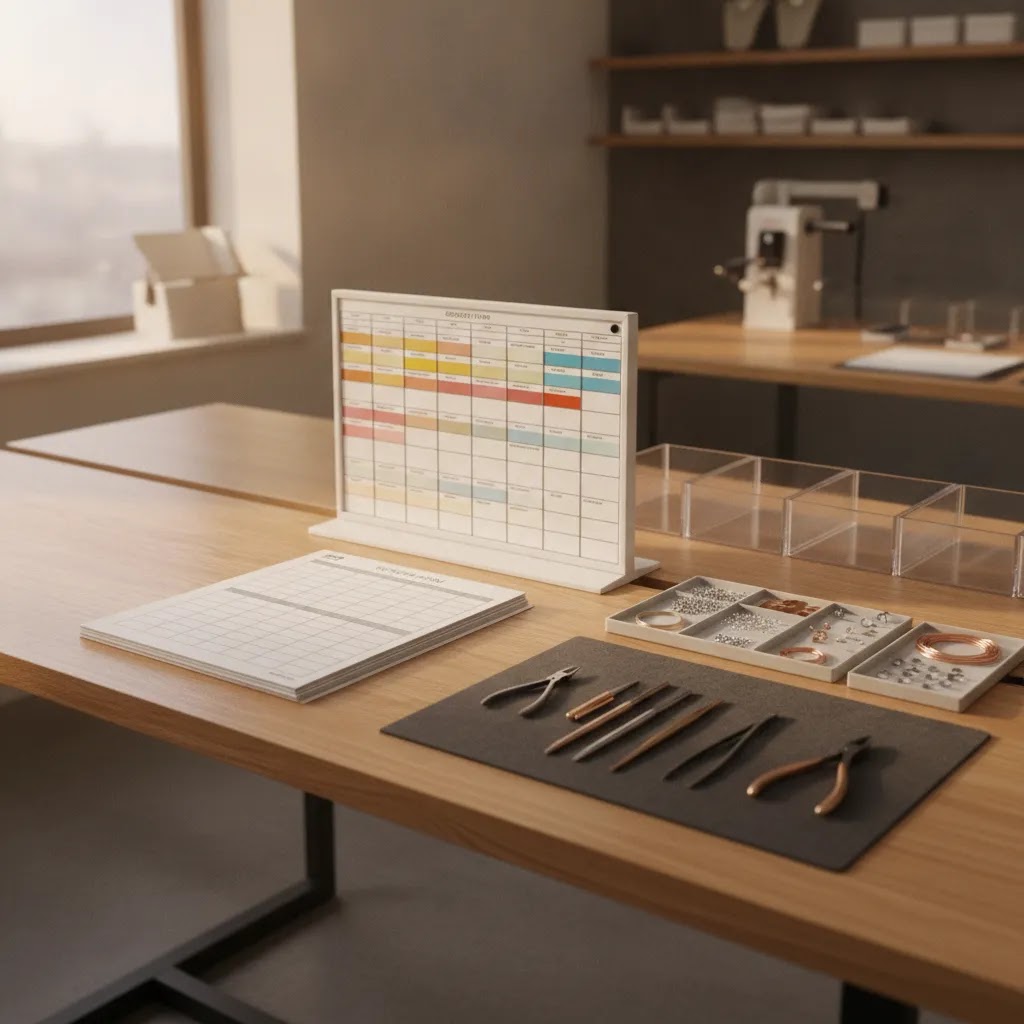
China and Thailand can both be valid sourcing routes. The better choice depends on what kind of growth your business is trying to sustain.
Where China may still fit
China may remain suitable if you already have a reliable supplier, your products are stable, and your team has strong internal control over specifications and quality checks. If cost pressure is your main issue, you may also need to review factors like tariffs on jewelry from china before changing countries.
Where Thailand may fit better for continuous growth
Thailand may become more attractive when your brand needs closer collaboration, more controlled development, and a manufacturing partner that supports custom work as an ongoing business relationship. This matters for brands scaling collections, not just placing isolated orders.
Common confusion: country reputation vs. partner quality
A country’s reputation should not replace partner-level evaluation. A weak process in Thailand can still create delays. Likewise, a disciplined partner in China can still perform well. Continuous growth comes from the supplier relationship, the workflow, and the consistency of execution.
When brands usually make this move
Most businesses do not shift countries because of one bad order. Instead, they move after patterns emerge that block scaling.
You may encounter this decision when:
- Your sample approvals take too many rounds because the brief is not being translated well.
- Your reorder confidence is low even after successful first production.
- Your team spends too much time managing supplier follow-up.
- You want more original collection development instead of adapting generic stock designs.
- Your sourcing strategy needs a stronger regional base, such as reviewing bangkok jewelry wholesale options as part of a Thailand sourcing map.
This is also common among small but ambitious brands. A small business jewelry brand may not need the biggest factory. It may need the clearest one.
Strengths and Considerations
Strengths
- A Thailand move may support more stable long-term growth if your current China setup is process-heavy to manage.
- It can improve communication quality and design collaboration, depending on the partner you choose.
- It may help private label and custom development programs operate with clearer approvals and fewer avoidable revisions.
- It often encourages a more deliberate sourcing review, which can improve SKU planning, reorder structure, and quality checkpoints.
- For brands with global customers, a partner that combines manufacturing and fulfillment support may reduce coordination friction.
Considerations
- Transitioning countries usually requires time, testing, and at least one validation cycle before larger production decisions feel safe.
- Sample interpretation, production methods, and documentation habits may differ from your current supplier, so not every SKU transfers smoothly.
- The move may not reduce costs, especially if your current China partner is already efficient and your main issue is internal planning rather than supplier performance.
- Minimum order quantities, lead times, and revision cycles can still vary widely by project and by manufacturing partner.
A practical resource for brands reviewing options

If your team is comparing sourcing models rather than looking for a retail purchase, Royi Sal Jewelry is positioned as a collaborative B2B manufacturing partner. The company focuses on custom jewelry design and development, wholesale and private label manufacturing, design consultation, and global order fulfillment.
Because Royi Gal’s background combines design and manufacturing, the discussion can stay grounded in how a collection actually moves from idea to approved production. For brands reviewing supplier fit, it may help to explore Royi Sal Jewelry’s approach to jewelry manufacturing and the broader jewelry sourcing category before making a country-shift decision. That kind of review is often more useful than comparing countries on headline assumptions alone.
How to evaluate your options
If you are serious about continuous growth, compare manufacturing options against business outcomes, not just unit cost. A workable evaluation framework usually includes five areas.
Design capability and development control
Ask how the supplier handles custom briefs, revisions, and approvals. Growth stalls when design intent gets lost between concept and sample. If you want a deeper workflow view, review the jewelry manufacturing process concept creation.
Quality consistency across reorders
Do not judge only from one attractive sample. Ask how the team documents approved samples and how it manages repeat runs.
Communication reliability
Look for precise answers, realistic timelines, and early risk flagging. Clear communication is often the difference between a manageable overseas relationship and a draining one.
Order flexibility and scalability
Evaluate whether the supplier can support your current volume without making future growth awkward. The right fit for a developing brand is not always the same as the right fit for a high-volume importer.
Logistics and international support
Production is only part of the equation. Shipping coordination, documentation, and fulfillment planning may affect your growth pace just as much as sampling quality.
A structured review around these criteria is usually more useful than asking whether China or Thailand is categorically better. You are selecting a business system, not a flag on a map.
What to verify in a Thailand manufacturing partner before you move volume
Once you have narrowed your options, verification becomes the priority. A country move that supports continuous growth usually depends on partner readiness: the ability to export consistently, manage development with discipline, and reproduce approved work without constant interpretation changes.
Check responsibility and handoffs
Start by asking what the manufacturer handles in-house versus what is outsourced. You are not trying to avoid outsourcing at all costs. Instead, you are trying to understand how many handoffs your product goes through and who stays accountable at each point.
Ask about export experience as well, including how the team handles documentation and who manages communication during shipping coordination. If your business depends on reliable replenishment, those operational details matter as much as the sample itself.
Review sampling and QC controls
Sampling capacity and QC checkpoints are also worth clarifying early. Ask how the team schedules sampling, who evaluates the sample internally, and what checkpoints exist between approval and production shipment. A clear checkpoint structure helps prevent surprise changes that appear only after goods arrive.
If a partner cannot explain its controls clearly, you may end up building the control system on your side. As a result, management drag increases.
Test communication and approval discipline
Communication and accountability can be tested, not just discussed. Ask who owns the tech pack or spec set once development begins, and ask how the team confirms revisions. Also ask how issues are flagged if the factory sees a problem with feasibility, measurements, or finishing details.
Then look at how approvals are recorded. If your approvals live in scattered messages and inconsistent file names, the relationship will rely on memory instead of process. That typically breaks down as volume increases.
Use a four-step validation cycle
A practical validation cycle often includes four steps before transferring core volume: a sample round, a pre-production confirmation that reflects the approved version, monitoring the first production output closely, and a reorder test.
The reorder test is where many supplier evaluations become real. It shows whether the factory can repeat the approved standard under routine conditions, not just deliver a strong first attempt with extra attention. In practice, those 4 steps give teams a cleaner way to judge long-term fit.
Frequently Asked Questions
Is moving from China to Thailand always the right growth move for a jewelry brand?
No. The move only makes sense if it improves the parts of your business that are limiting scale, such as communication, development control, reorder consistency, or supplier trust. If your China partner is already performing well, changing countries could add complexity without solving a real constraint.
What usually triggers a supplier shift in jewelry manufacturing?
Brands often reconsider their sourcing model after repeated sample issues, weak communication, delayed launches, or inconsistent reorders. The trigger is usually a pattern, not one isolated problem. A country move tends to happen when those issues begin to affect planning, margins, and confidence in future growth.
Can a smaller jewelry business benefit from Thailand manufacturing?
Yes, in many cases. Smaller brands may benefit if they need a more collaborative process and better support for custom development. The key is partner fit. A small brand still needs realistic expectations about production timelines, approval rounds, and minimum order planning.
Does this shift mainly affect cost?
Not always. Cost matters, but the larger issue is often operating efficiency. A partner who helps reduce revision cycles, management time, and reorder risk may improve business performance even if the unit quote is not the lowest available. That is why landed decision quality matters as much as landed cost.
How should brands test a Thailand manufacturer before a full move?
Start with a controlled pilot. That may include a small SKU group, a custom sample round, or a reorder candidate with clear specifications. The goal is to test communication, sample accuracy, approval discipline, and production follow-through before you transfer a larger share of business.
What role does design support play in long-term growth?
It plays a significant role for brands building original collections. If your manufacturer can support design consultation and custom development, your team may move faster from concept to marketable product. That matters more as your assortment becomes more brand-specific and less dependent on generic sourcing.
Should brands compare tariffs before changing manufacturing countries?
Yes. Duty exposure, import treatment, and landed-cost structure can shape the real economics of a sourcing decision. Country changes should be reviewed alongside freight, documentation, fulfillment, and customs factors, not treated as a production-only decision.
How can Royi Sal Jewelry help during this evaluation stage?
Royi Sal Jewelry offers a B2B model built around custom jewelry design and development, manufacturing, collaborative consultation, and global fulfillment support. For brands weighing sourcing options, that may provide a more structured way to assess whether a new manufacturing relationship could support the next phase of growth.
Which business is most profitable in Thailand?
Profitability depends on your capabilities, capital, and route to market, so it is difficult to generalize. For jewelry brands evaluating manufacturing, the more relevant question is whether your product category and operating model can be produced with consistent quality and repeatability at your target volumes. If your goal is continuous growth, prioritize businesses and product lines where you can document specifications clearly, forecast reorders, and maintain quality control without excessive rework.
Who is Thailand’s biggest trade partner?
Trade relationships shift over time and can vary by product category. For a jewelry brand, the practical takeaway is that Thailand is an export-oriented manufacturing environment, and your landed-cost and lead-time outcomes will depend on route, freight mode, documentation, and customs handling. If trade uncertainty is part of your motivation, diversification planning usually works better than assuming any one country relationship eliminates risk.
Are most Thai people ethnically Chinese?
No. Thailand is ethnically diverse, and many Thai people have mixed backgrounds. For manufacturing decisions, ethnicity is not a useful evaluation metric. What affects your outcomes is the partner’s process discipline: how they communicate, how they document approvals, how they manage QC, and whether they can support repeat production at your required standard.
What is the 0.1% rule in China?
The phrase is used informally in different contexts, and it is not a single standardized rule in manufacturing. If you hear a rule like this referenced in supplier conversations, the practical response is to translate it into measurable acceptance criteria for your products. Define tolerances, define what triggers rework or remake, and keep approvals and change control documented so quality expectations do not get reinterpreted between sample and reorder.
Key Takeaways
- Continuous business growth by manufacturing from China to Thailand is a supply-chain strategy, not just a country change.
- The best reason to move is stronger operational control, not a vague assumption that another country is automatically better.
- Evaluate development workflow, communication, reorder consistency, scalability, and logistics support together.
- Thailand may suit brands that need a more collaborative custom manufacturing relationship.
- Test any new partner with a controlled pilot before shifting major production volume.
Conclusion
A shift from China to Thailand can support continuous growth if it fixes the problems that are actually holding your jewelry business back. That may mean better communication, tighter development control, stronger reorder confidence, or a more collaborative production relationship. It is rarely a one-variable decision, and it should not be treated like one.
If your brand is assessing manufacturing options for the next stage of growth, Royi Sal Jewelry offers a business-focused path that combines custom design, manufacturing, and fulfillment support under one collaborative model. Visit royisal.com to learn more about the process, or contact the team to discuss your project scope and sourcing priorities.